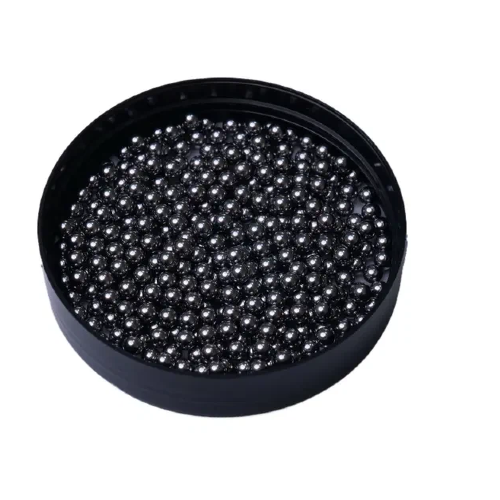
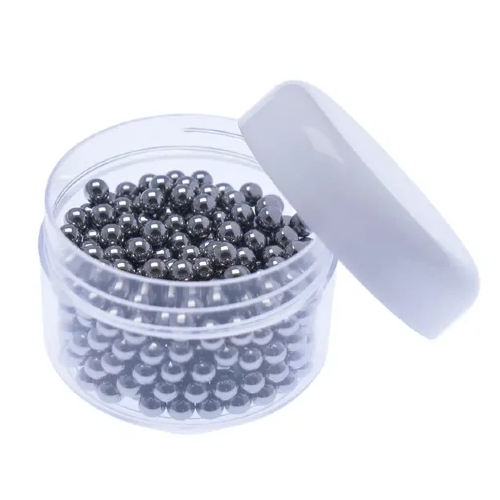
The manufacturing landscape relies heavily on components that provide smooth motion, reduced friction, and high load-bearing capabilities. Among these, the precision steel ball stands out as a fundamental element found in everything from household appliances to sophisticated aerospace machinery. Understanding the lifecycle of these components, from the selection of raw materials like the Carbon Steel Ball to the final application in high-stress environments, is essential for any industrial procurement professional or engineer looking to optimize system performance.
Precision steel balls are highly engineered spherical components manufactured through a rigorous process of cold heading, flashing, heat treatment, grinding, and lapping to achieve exact tolerances and surface finishes. These components, including the versatile Carbon Steel Ball, are utilized across diverse industries such as automotive, aerospace, and industrial machinery to facilitate rotational movement, manage axial loads, and ensure the efficiency of mechanical systems.
The journey of a precision ball is one of extreme transformation, where raw steel wire is shaped into a near-perfect sphere capable of enduring millions of revolutions. This article explores the intricate manufacturing processes, the diverse material options available, and the specific industrial applications that make these small components indispensable to global trade and technology.
Precision Steel Balls For a Variety of Purposes
Precision steel balls, including the widely utilized Carbon Steel Ball, serve as the backbone of rotational motion and friction reduction in a vast array of consumer and industrial products. These spheres are designed to distribute loads evenly across surfaces, allowing for high-speed rotation and movement with minimal energy loss, making them essential for everything from simple drawer slides to complex satellite navigation systems.
The versatility of the Carbon Steel Ball and its counterparts stems from the ability to manufacture them to specific "grades." In the world of precision manufacturing, a grade refers to the allowable deviation from a perfect sphere. For instance, a Grade 10 ball is significantly more precise than a Grade 1000 ball. This range allows industries to select a cost-effective Carbon Steel Ball for low-precision needs like furniture casters, while opting for high-grade chrome steel for high-velocity turbine engines.
Beyond simple motion, these balls are often used as check valves or locking mechanisms. Because a sphere provides a consistent seal regardless of its orientation, a Carbon Steel Ball is frequently found in hydraulic systems where it acts as a one-way gate for fluid. The inherent geometry of the sphere makes it the most efficient shape for handling multi-directional stress, which is why the Carbon Steel Ball remains the preferred choice for engineers globally.
Furthermore, the environmental adaptability of precision balls is a key factor in their varied purposes. Depending on the coating and heat treatment, a Carbon Steel Ball can be hardened to resist deformation or treated to improve its wear resistance. This adaptability ensures that whether the ball is submerged in oil within a transmission or exposed to the elements in an outdoor hinge, it continues to perform its primary function of reducing friction without failing prematurely.
Uses For Precision Steel Balls in Manufacturing
In the manufacturing sector, precision steel balls and the Carbon Steel Ball are integral components used in the construction of machine tools, robotic arms, and automated assembly lines to ensure repeatable accuracy and smooth linear or rotary motion. These components allow manufacturing equipment to operate at high speeds with the extreme reliability required for mass production environments where downtime is costly.
Modern manufacturing thrives on automation, and at the heart of most automated systems are linear motion guides and ball screws. These systems utilize a series of balls, often a high-quality Carbon Steel Ball, to convert rotary motion into precise linear movement. This allows a robotic arm to position a tool within microns of its intended target. Without the consistent diameter and hardness of the Carbon Steel Ball, the friction within these screws would lead to heat buildup and rapid loss of precision.
Key Manufacturing Applications
Ball Screws: Essential for CNC machinery to move the cutting head with absolute precision.
Linear Guides: Used in 3D printers and industrial plotters for smooth, low-friction travel.
Turntables: Large scale manufacturing carousels rely on Carbon Steel Ball bearings to rotate heavy workpieces.
The manufacturing of the balls themselves is a marvel of industrial engineering. Starting with a wire, the Carbon Steel Ball is formed through cold heading, where the metal is compressed into a spherical shape. It then undergoes a flashing process to remove the "pole" or "ring" left by the dies. This ensures that when the Carbon Steel Ball is eventually placed into a manufacturing machine, it provides a perfectly uniform contact point, which is vital for maintaining the calibration of sensitive production equipment.
Automotive and Aerospace Uses for Precision Steel Balls
The automotive and aerospace industries require precision steel balls that can withstand extreme pressures, high centrifugal forces, and significant temperature fluctuations while maintaining structural integrity. From the wheel bearings of a family sedan to the fuel control systems of a jet engine, the Carbon Steel Ball and other high-grade alloys are critical for ensuring passenger safety and vehicle efficiency.
In automotive engineering, the Carbon Steel Ball is frequently used in steering columns, seat recliners, and seatbelt locking mechanisms. However, for the drivetrain and wheel bearings, where loads are significantly higher, specialized chrome or stainless steel balls are used alongside the Carbon Steel Ball. These components must endure billions of cycles over the lifespan of a vehicle. A failure in a single Carbon Steel Ball within a bearing can lead to increased noise, vibration, and eventual mechanical seizure, which is why quality control is paramount.
Aerospace applications take these requirements even further. While a standard Carbon Steel Ball might be used for interior cabin components, the engine and flight control surfaces require balls made from materials like M50 tool steel or ceramic. These balls must operate in a vacuum or at altitudes where temperatures drop to -55°C, or near engines where they exceed 200°C. The precision required is so high that the balls are often measured to within millionths of an inch to ensure they do not expand or contract beyond their housing tolerances.
Critical Safety Components
Anti-lock Braking Systems (ABS): Tiny balls act as valves to pulse brake fluid.
Fuel Injection: High-precision balls regulate the flow of fuel into the combustion chamber.
Flight Controls: Ensure the smooth operation of flaps and ailerons on aircraft.
Precision Steel Ball Uses for Industrial Machinery
Industrial machinery, ranging from heavy-duty mining equipment to delicate food processing lines, utilizes precision steel balls to handle massive radial and axial loads. The Carbon Steel Ball is a staple in this sector due to its excellent hardness and cost-efficiency, providing the necessary durability for gearboxes, pumps, and conveyor systems that operate 24/7 in harsh environments.
In the world of heavy industry, the Carbon Steel Ball is often found in large-scale bearings used in wind turbines and earth-moving equipment. These bearings must support the weight of massive blades or buckets while allowing for smooth rotation. The Carbon Steel Ball is chosen for its ability to be case-hardened, meaning the outer surface is extremely hard to resist wear, while the inner core remains somewhat ductile to absorb shocks and impacts without fracturing.
Common Machinery Implementations
Hydraulic Pumps: Balls serve as check valves to maintain pressure and direction.
Wind Turbines: Massive pitch and yaw bearings utilize precision balls to position blades.
Conveyor Systems: Millions of Carbon Steel Ball units are used in rollers to move goods across warehouses.
Pumps and valves represent another major application for the Carbon Steel Ball. In these scenarios, the ball acts as a sealing element. When pressure is applied from one direction, the Carbon Steel Ball is pushed against a seat, creating a liquid-tight seal. This is common in oil and gas extraction, where the Carbon Steel Ball must resist not only pressure but also the corrosive effects of the fluids being pumped. Selecting the right grade of Carbon Steel Ball ensures that the valve remains operational for years without maintenance.
The Type of Steel Used Depends On Several Factors
Selecting the appropriate material for a precision ball involves analyzing the operational environment, including load requirements, exposure to corrosive elements, and the need for electrical conductivity or magnetism. While the Carbon Steel Ball is the most common choice for general-purpose applications, other materials like stainless steel, chrome steel, and tungsten carbide are selected when specific performance thresholds must be met.
The Carbon Steel Ball is generally categorized into two types: low carbon and high carbon. Low Carbon Steel Ball variants are typically used when through-hardening is not required, often appearing in furniture, drawer slides, and low-speed bearings. High Carbon Steel Ball options, however, can be hardened to much higher levels, making them suitable for more demanding mechanical applications. The primary advantage of the Carbon Steel Ball is its balance of performance and affordability.
Comparison of Material Properties
When corrosion is a factor, the Carbon Steel Ball may be swapped for stainless steel. For example, in food processing or chemical handling, a standard Carbon Steel Ball would rust and contaminate the product. In contrast, if the primary requirement is extreme hardness and wear resistance in a high-speed environment, Chrome Steel is preferred over the standard Carbon Steel Ball. Understanding these nuances is critical for engineers to prevent premature component failure.
Choosing the Right Precision Steel Balls For Your Requirements
Selecting the right precision ball requires a thorough evaluation of the mechanical load, the desired lifespan of the component, and the environmental conditions it will face. A Carbon Steel Ball might be perfect for a domestic application, but industrial or high-precision tasks require a careful look at the "Grade" of the ball, which dictates the tolerance and sphericity of the final product.
The first step in selection is determining the necessary Grade. If you are designing a high-speed electric motor, a Grade 10 or Grade 25 ball is necessary to minimize vibration and noise. For a simple sliding door, a Grade 100 or Grade 1000 Carbon Steel Ball is more than sufficient and much more economical. Using a higher grade than necessary increases costs without providing a tangible benefit, while using a lower grade can lead to friction and system failure.
Selection Checklist
Load Capacity: Will the Carbon Steel Ball be under constant high pressure?
Environmental Exposure: Is there moisture, salt, or acid present that would corrode a Carbon Steel Ball?
Precision Level: Does the application require tight tolerances to prevent "slop" or play in the mechanism?
Cost vs. Performance: Does the budget allow for premium materials, or is the Carbon Steel Ball the most efficient choice?
Finally, consider the finish of the ball. A Carbon Steel Ball can be polished to a mirror finish to reduce friction to the absolute minimum. In specialized cases, coatings like zinc, nickel, or chrome can be applied to a Carbon Steel Ball to provide a layer of protection against the elements while maintaining the structural benefits of the carbon steel core. By matching these factors to your specific needs, you ensure the longevity and reliability of your machinery.
With advanced production equipment and state-of-the-art testing instruments, our commitment to quality permeates every phase of production, from inception to final delivery.