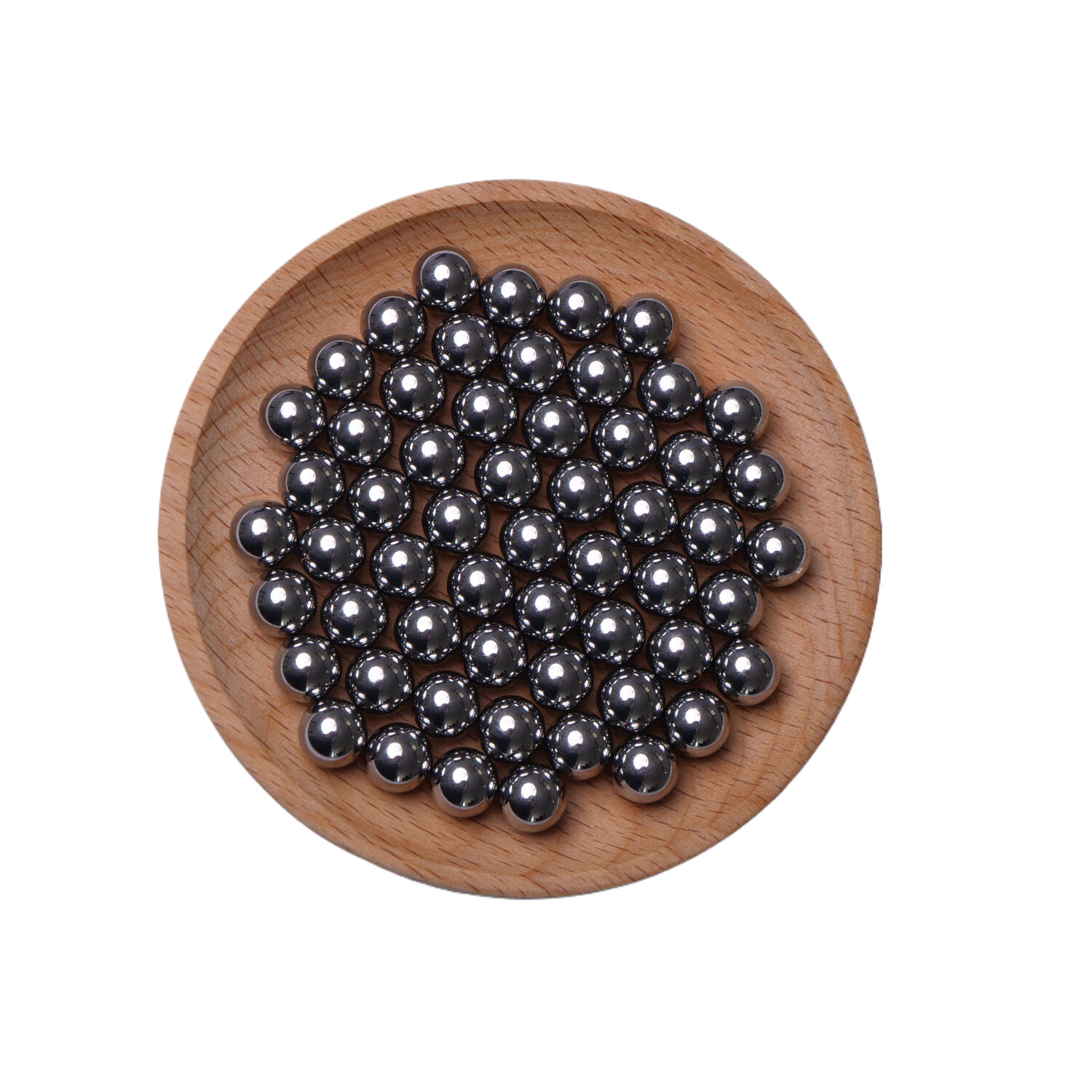
Selecting the optimal material for a Bearing Ball is never merely a basic technical specification. It serves as a critical driver of machinery lifespan. It dictates your maintenance schedules and ensures overall operational reliability. Standard introductory choices often fail in demanding industrial settings. Engineering and procurement teams face complex daily challenges. You must rigorously evaluate materials against harsh environmental stressors. You must calculate precise load requirements. You must adhere to strict industry compliance standards.
Failing to match the material to the application invites disaster. It significantly increases the risk of catastrophic equipment failure. A definitive evaluation of different materials solves this problem. It allows decision-makers to weigh distinct material benefits against their inherent shortfalls. We will guide you through these complex material science parameters. You will learn how to align component specifications directly with your daily operational realities. This structured approach helps you mitigate failure risks while optimizing long-term lifecycle value.
Key Takeaways
Chrome Steel (52100) delivers maximum load capacity and fatigue life but fails rapidly in corrosive or moisture-heavy environments.
Stainless Steel (440C) trades approximately 20% of its load-bearing capacity for essential oxidation and moisture resistance, making it vital for sanitary and washdown applications.
Ceramic Materials excel in high-speed, high-temperature, and electrically sensitive environments, but their brittleness requires strict assessment of shock-load risks.
Material Selection ROI is achieved by mapping the exact success criteria (RPM targets, chemical exposure, lubrication limits) against the specific physical constraints of the material.
The Business Impact of Bearing Ball Selection
Long-Term Value vs. Upfront Cost
We must frame material selection as a long-term operational investment. Cheaper upfront materials often create an illusion of savings. However, they frequently lead to compounding expenses over time. These hidden costs manifest through premature wear and frequent replacement cycles. Buying an inexpensive material twice is always more expensive than buying the correct material once. You must look far beyond the initial purchase order to understand actual financial impact.
Downtime & Failure Risks
Analyzing the true cost of machine downtime reveals the highest stakes. Downtime frequently occurs because of a mismatch between the material and its environment. Putting standard steel in a humid environment guarantees rapid oxidation. The resulting rust causes severe friction. This friction inevitably leads to spalling, where metal flakes break off under heavy loads. Similarly, using standard plastics near harsh solvents causes rapid chemical degradation. The plastic swells, loses its shape, and halts the machinery completely.
Defining Success Criteria
Establishing baseline evaluation metrics is your primary defense against failure. You should map out these metrics before contacting a supplier. First, define your dynamic and static load ratings. You need to know how much weight the system supports while moving and while stationary. Second, determine precise operating temperature ranges. Finally, establish realistic target lifespans. This comprehensive baseline protects your operational efficiency.
Chrome Steel vs. Stainless Steel: Evaluating the Metal Standards
52100 Chrome Steel: The Baseline for Heavy Loads
Engineers universally rely on 52100 chrome steel for heavy-duty applications. It offers an incredible combination of raw physical traits. It provides exceptional hardness and a remarkably high fatigue strength. This makes it the most cost-effective option for standard machinery operating in clean, controlled environments. When you need to support massive radial loads without deformation, chrome steel excels.
However, chrome steel carries notable shortfalls. Its primary weakness is terrible corrosion resistance. It rusts rapidly when exposed to water or high humidity. Furthermore, it depends entirely on continuous, high-quality lubrication. If the lubrication film breaks down, metal-to-metal contact will destroy the component swiftly. Always employ advanced sealing mechanisms if you use chrome steel near moisture sources.
440C Stainless Steel: The Corrosion Mitigator
When your environment turns hostile, 440C stainless steel steps up. It sacrifices some raw strength to gain vital chemical resistance. This material aggressively resists oxidation and moisture. It meets strict baseline compliance standards for food processing facilities, medical device manufacturing, and demanding marine applications. You can wash it down with harsh sanitizers safely.
The metallurgy dictates a necessary compromise. Its lower carbon content results in a reduced load-bearing capacity compared to standard chrome steel. You typically lose about 20% of your peak load threshold. Additionally, you face a noticeably higher baseline acquisition cost. Do not swap chrome steel for stainless steel without recalculating your dynamic load requirements.
Material Type
Corrosion Resistance
Relative Load Capacity
Ideal Application Environment
52100 Chrome Steel
Low (Prone to rust)
100% (Baseline standard)
Enclosed gearboxes, dry environments
440C Stainless Steel
High (Resists oxidation)
~80% of Chrome Steel
Food processing, marine, cleanrooms
Ceramic Bearing Balls: High-Speed and Extreme Environment Solutions
Silicon Nitride (Si3N4) and Zirconia (ZrO2) Properties
Silicon Nitride (Si3N4) and Zirconia (ZrO2) represent the pinnacle of advanced technical ceramics. These complex materials solve engineering problems where traditional metals fail entirely. They push the extreme boundaries of speed, temperature, and electrical resistance. Si3N4 is incredibly hard and dark, ideal for extreme speeds. ZrO2 is white and expands similarly to steel, making it perfect for hybrid assemblies.
Benefits (Features to Outcomes)
Ceramics deliver powerful outcomes derived from their unique physical structures. We see these benefits clearly in three main areas:
Electrical Insulation: Modern electric motors face severe electrical arcing risks. Stray currents jump across metal components, causing severe pitting. Ceramics are naturally non-conductive. They prevent electrical arcing entirely, protecting expensive motor components.
Lightweighting: A ceramic Bearing Ball weighs significantly less than a steel equivalent. This reduced mass dramatically lowers the centrifugal force exerted during operation. Lower force allows you to achieve significantly higher RPMs while generating far less frictional heat.
Thermal Stability: Extreme heat causes standard metals to expand, warp, and seize. Ceramics operate flawlessly in blistering high-temperature environments. They maintain their dimensional stability long after steel would have melted.
Shortfalls & Implementation Risks
Despite their futuristic appeal, ceramics carry distinct implementation risks. Their crystalline structure makes them exceptionally hard but highly brittle. This brittleness makes them vulnerable to sudden impact and severe shock loads. Dropping a ceramic component or subjecting it to a violent mechanical jolt can shatter it instantly. Furthermore, their complex manufacturing process results in premium pricing. You must rigorously justify this cost before deploying them widely.
Certain niche applications require entirely non-metallic solutions. Engineered plastics and precision glass step in to fill these highly specialized gaps. These materials provide absolute chemical inertness. You can submerge them in highly acidic or alkaline solutions safely. They possess completely non-magnetic properties. This makes them ideal for sensitive medical imaging machines like MRI equipment. Many engineered plastics also feature innate self-lubricating capabilities. You can run them completely dry in vacuum chambers or sterile food processing lines.
Inherent Shortfalls
You must navigate significant physical limitations when choosing these specialized materials. They offer minimal load-bearing capacity compared to metallic or ceramic counterparts. They will crush easily under heavy mechanical weight. Plastics also show a high susceptibility to thermal expansion. A slight increase in operating temperature can cause the polymer to swell rapidly. They also offer very low precision tolerances. The standard ABEC precision ratings used for metal rarely apply to these softer materials.
Implementation Considerations
Swapping metal for a polymeric Bearing Ball requires deep engineering diligence. You must rigorously verify the specific thermal thresholds of the chosen polymer. Always confirm the absolute maximum load limits before replacing existing metal components. A common engineering mistake is ignoring the thermal expansion coefficient. You must calculate exactly how much the plastic will grow under operational heat to prevent sudden mechanical seizure.
Decision Framework: Shortlisting the Right Material
Environmental & Compliance Mapping
Selecting the perfect material is a systematic process of elimination. You must match physical properties to your real-world demands. Begin by mapping your materials directly to operational realities. If you operate inside a sterile cleanroom, you must avoid shedding particles. This points you toward stainless steel or smooth ceramics. If your equipment undergoes daily chemical washdowns, you must utilize engineered plastics.
Load vs. Speed Matrix
You must balance heavy radial load capabilities against high-RPM advantages. Chrome steel handles the heaviest static loads effortlessly. It carries massive weight at low to moderate speeds. Conversely, ceramics dominate high-speed, low-friction scenarios. If your machine runs at 50,000 RPM, ceramics are your safest bet. If it supports heavy industrial loads at 50 RPM, chrome steel wins easily.
Operational Scenario
Primary Requirement
Recommended Material
Key Caveat
Heavy Industrial Conveyor
High Static/Radial Load
52100 Chrome Steel
Requires constant lubrication
Chemical Washdown Zone
Absolute Inertness
Engineered Plastics
Low load thresholds
High-Speed Spindle Motor
Low Mass, Low Friction
Silicon Nitride Ceramic
Vulnerable to sudden shocks
Lubrication Realities
Never ignore your actual maintenance limitations. Some mechanisms sit deep inside complex machinery. This makes routine lubrication schedules impossible to execute. Dry-running or hard-to-reach applications heavily favor ceramics or self-lubricating plastic options. If your technicians cannot reach it to grease it, do not specify standard chrome steel.
Next-Step Actions
We strongly recommend a phased implementation approach. Always start by ordering prototypes. Run pilot tests using your specific duty-cycle data in a controlled segment of your facility. Consult deeply with specialized application engineers. Review your operational temperatures, RPMs, and load data together before making a final commitment.
Conclusion
No single material proves universally superior across all industrial applications. Finding the optimal choice remains a carefully calculated compromise. You must continually balance raw load capacity against harsh environmental resistance and overall acquisition cost. A material that dominates in a cleanroom will fail miserably in a heavy mining operation.
We urge you to base your procurement decisions on verified operational data. Rely on exact RPM metrics, precise temperature readings, and documented chemical exposure levels. Do not fall back on outdated industry habits. What worked perfectly twenty years ago might severely limit your modern machinery.
We encourage technical buyers to submit their specific application constraints to a qualified engineering team. This collaborative approach guarantees tailored material shortlisting. It ensures rigorous physical testing before deployment. By doing so, you ensure your equipment runs smoother, lasts longer, and delivers exceptional lifecycle performance.
FAQ
Q: Can ceramic bearing balls handle heavy shock loads?
A: No. While ceramics excel in high-speed and high-temperature environments, their crystalline structure makes them highly brittle. They handle smooth, consistent radial loads exceptionally well. However, sudden impact shocks or violent vibrations can easily cause them to fracture or shatter entirely. Avoid them in high-impact environments.
Q: Why choose 440C stainless steel over standard chrome steel?
A: You choose 440C stainless steel primarily for its superior corrosion resistance. It withstands oxidation and moisture, making it essential for food processing or marine environments. However, this resistance comes at a cost. You trade away approximately 20% of the peak load-bearing capacity that standard chrome steel provides.
Q: Are plastic bearing balls suitable for high-speed machinery?
A: Generally, no. Plastic components suffer from significant thermal expansion when exposed to the frictional heat generated by rapid RPMs. They also lack the strict precision tolerances required to remain balanced at high speeds. They are much better suited for low-speed, chemically corrosive environments.
Q: How does operating temperature dictate bearing ball material choice?
A: Temperature establishes absolute functional limits. Standard plastics melt or severely deform under moderate heat. Traditional metals can warp, lose their temper, or seize when exposed to extreme thermal conditions. Conversely, advanced ceramics maintain their precise structural integrity at temperatures that would destroy most other materials.
With advanced production equipment and state-of-the-art testing instruments, our commitment to quality permeates every phase of production, from inception to final delivery.