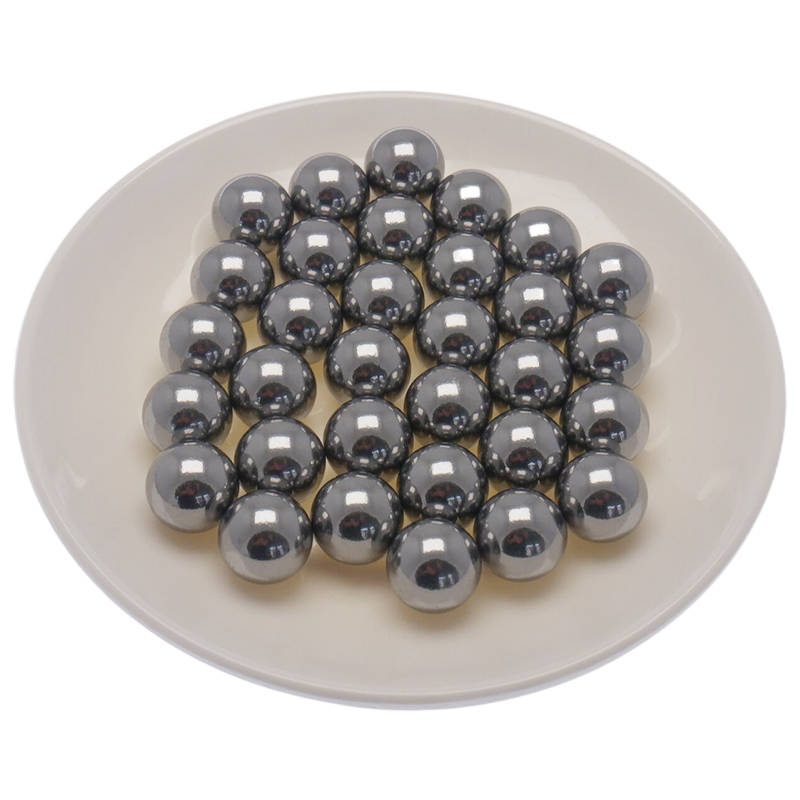
To choose the right steel ball material, you must identify your application environment, mechanical stress levels, and regulatory standards, then select carbon steel for cost-effective toy or light-duty use, stainless steel for corrosion resistance, or chrome steel for high-precision, high-load industrial machinery. This guide will walk you through every critical factor in the selection process to ensure you achieve peak operational efficiency and long-term product reliability.
In the global industrial and manufacturing sectors, precision-engineered spheres serve as foundational components within millions of products. From massive wind turbines and automotive transmissions to complex medical equipment and simple consumer playthings, the performance of the entire assembly often rests on these small components. For procurement professionals, product designers, and engineers, navigating the complex matrix of metallurgy can be challenging, but understanding how specific materials behave under different operational conditions is the key to minimizing product failure rates and maximizing cost-efficiency.
The following comprehensive breakdown covers the essential metallurgical families, technical specifications, and application matches to simplify your selection process. By comparing the operational profiles of distinct steel grades, you will gain a clear roadmap for sourcing components that perfectly align with your technical requirements and budget constraints.
Content Directory and Summary
Section
Summary
Understanding the Importance of Steel Ball Material Selection
Explains how material selection impacts mechanical lifespan, operational costs, and overall application safety.
The Characteristics and Uses of Carbon Steel Balls
Focuses on carbon steel options, highlighting their balance of affordability and performance in specialized fields like toy manufacturing.
Exploring Stainless Steel Balls for Advanced Applications
Covers the corrosion-resistant properties of stainless steel grades and their necessity in harsh environments.
Analyzing Chrome Steel Balls for High Precision and Load
Examines high-chromium alloy steel balls designed for intense structural loads, high-speed rotation, and extreme precision.
Key Factors to Evaluate When Selecting Steel Ball Materials
Outlines a step-by-step framework evaluating load capacity, hardness, environment, and cost to guide procurement.
How Manufacturing Standards Influence Quality and Performance
Discusses industry tolerances, sphericity ratings, and international quality standards that ensure component reliability.
Conclusion and Strategic Sourcing Recommendations
Provides a final summary and actionable advice for establishing a reliable component supply chain.
Understanding the Importance of Steel Ball Material Selection
Material selection dictates the ultimate mechanical efficiency, wear rate, and financial feasibility of your production line. Selecting the wrong steel ball material causes premature component failure, increased machinery downtime, and elevated safety risks across your product lifecycle. When a material cannot withstand the physical or environmental demands of its environment, the consequences extend far beyond the individual component, resulting in costly product recalls, lost production hours, and damaged brand reputation.
Every application imposes a unique set of stresses on its components, including constant friction, rotational velocity, heavy structural weight, or exposure to corrosive chemical agents. If an engineer mistakenly selects a low-hardness material for a high-load rotational bearing, the balls will undergo plastic deformation, destroying the circular geometry required for smooth movement. Conversely, over-specifying a high-end alloy for a basic consumer application inflates production costs unnecessarily, destroying your market competitiveness.
Furthermore, proper material selection ensures compliance with international quality and safety regulations. In industries like food processing, medical devices, and children's products, chemical migration and material toxicity are strictly regulated. Choosing a material that offers the exact required blend of physical toughness and chemical inertness safeguards your users while optimizing your overall manufacturing budget.
The Characteristics and Uses of Carbon Steel Balls
Carbon steel variants offer an ideal balance of surface hardness, structural integrity, and exceptional cost-effectiveness for non-precision applications. A Carbon Steel Ball provides an economical manufacturing solution characterized by high core toughness and customizable case depth after proper heat treatment. These components are widely utilized in industries where extreme high-precision tolerances are secondary to budget constraints and reliable, low-load mechanical performance.
The mechanical performance of these spheres depends heavily on their specific carbon content, which typically divides into low-carbon and high-carbon categories. Low-carbon variants are exceptionally ductile and easily machined, making them perfect for case-hardening processes that create a wear-resistant outer skin while retaining a shock-absorbing core. High-carbon variants feature a uniform hardness throughout their structure, offering greater resistance to deformation under moderate static loads.
In specialized B2B sectors like consumer goods, recreational equipment, and mass-market manufacturing, these components provide the mechanical movement required without inflating production costs. For instance, in the global toy manufacturing sector, utilizing a safe, durable, and highly polished Carbon Steel Ball is standard practice for creating smooth rolling motions in kinetic playsets, educational puzzles, and mechanical toys. These components deliver excellent performance in low-velocity environments while keeping raw material costs highly competitive.
1. Cost Efficiency
This material family is significantly less expensive to produce and process compared to stainless steel or chrome alloy alternatives, allowing high-volume manufacturing facilities to lower their baseline Bill of Materials (BOM) costs.
2. High Surface Hardness
Through specialized carburizing or case-hardening thermal treatments, these spheres achieve a remarkably hard outer layer that effectively resists surface scratching, abrasive wear, and localized frictional deformation during prolonged operation.
3. Excellent Machinability
Before undergoing final heat treatment stages, the raw material exhibits superb formability, enabling manufacturers to efficiently press, grind, and polish the spheres to meet exact geometric configurations and surface finish requirements.
4. Diverse Industrial Applications
These versatile components are widely implemented across a broad range of everyday products, which can be categorized by their primary commercial environments:
Consumer Commodities: Integrated into everyday household items such as lightweight drawer slides, sliding door track assemblies, rolling luggage wheels, and swivel furniture casters.
Recreational Gear: Extensively used within bicycle steering columns, pedal bearings, low-cost roller skates, and various types of sporting goods that operate at moderate rotational speeds.
Agitators and Mixing Media: Utilized inside aerosol spray paint cans, chemical blending containers, and cosmetic bottles to break up settled particulates and ensure fluid homogeneity.
Toy Production Assemblies: Deployed inside interactive children's games, gravity tracks, and small wheeled toys where installing high-grade Non-Toxic Smooth Soft Carbon Balls for Toy Production guarantees safe, long-lasting operational fluidity.
Exploring Stainless Steel Balls for Advanced Applications
Stainless steel components provide the necessary chemical passivity and oxidation resistance required for harsh operational environments. Stainless steel spheres are formulated with high chromium and nickel content to resist chemical corrosion, atmospheric rust, and organic acids. This material family is essential for cleanrooms, outdoor machinery, chemical processing plants, and food-grade production environments where moisture and corrosive agents are constantly present.
The stainless steel family is broadly divided into austenitic and martensitic grades, each serving different mechanical and environmental purposes. Austenitic grades, such as 304 and 316, contain high amounts of chromium and nickel, providing exceptional resistance to pitting and acid corrosion. These grades are non-magnetic in their annealed state and offer excellent compliance with sanitary regulations, though they possess lower surface hardness compared to carbon steels.
Martensitic stainless steels, such as 420 and 440C, are high-carbon alloys that can be heat-treated to achieve exceptional hardness and wear resistance. While they offer slightly less corrosion resistance than austenitic grades, their ability to maintain structural integrity under high structural loads makes them perfect for check valves, high-stress marine bearings, and precision aerospace components that operate in humid or mildly acidic conditions.
1. Superior Corrosion Resistance
The presence of chromium allows the material to automatically form an microscopic, self-healing chromium oxide film on its surface, preventing oxygen and moisture from penetrating the underlying steel and causing destructive rust.
2. High Temperature Tolerance
Certain stainless steel alloys maintain their structural dimensions, tensile strength, and resistance to scaling at elevated operating temperatures where standard carbon steels would soften or warp.
3. Hygienic Material Profiles
Austenitic grades do not leach toxic heavy metals or chemical contaminants into their surroundings, making them perfectly suited for strict medical, pharmaceutical, and food-processing hygiene regulations.
4. Specialized Material Environment Uses
The deployment of these corrosion-resistant spheres spans several critical industries requiring high sanitation or chemical resistance:
Chemical and Process Control: Installed inside flow meters, acid pumps, mixing impellers, and industrial check valves managing highly volatile or caustic chemical solutions.
Medical and Laboratory Equipment: Used within blood processing devices, surgical instruments, laboratory centrifuges, and diagnostic machinery requiring repeated sterilization and autoclaving cycles.
Marine Marine Hardware: Deployed in deep-sea drilling assemblies, sailboat rigging components, and coastal infrastructure equipment exposed to continuous saltwater spray and high humidity.
Food and Beverage Automation: Utilized throughout dairy pasteurization lines, commercial bottling equipment, and food packaging machinery where harsh sanitizing chemicals are regularly applied.
Analyzing Chrome Steel Balls for High Precision and Load
Chrome steel represents the premier material choice for heavy-duty industrial applications requiring extreme precision, high rotational speeds, and exceptional fatigue life. A chrome alloy steel sphere features uniform throughout-hardness and dense microscopic grain structures that maximize resistance to mechanical fatigue and high-load deformation. This material is the universal standard for precision ball bearings used in automotive engines, electric motors, and high-performance industrial machinery worldwide.
Commonly referred to as AISI 52100 in international engineering standards, this material contains approximately 1% carbon and 1.5% chromium. This specific metallurgical composition undergoes rigorous through-hardening thermal processes, resulting in a Rockwell hardness rating typically ranging from 60 to 66 HRC. This intense hardness allows the sphere to withstand immense localized Hertzian contact stresses without suffering structural breakdown or micro-cracking over billions of operational cycles.
In addition to its incredible load-bearing capacity, chrome steel can be ground and lapped to incredibly tight geometric tolerances. Manufacturers can achieve exceptional levels of sphericity and minimal surface roughness, which are critical for minimizing friction, heat generation, and vibrational noise in high-speed applications. However, because chrome steel has limited built-in corrosion resistance, it requires continuous lubrication with high-quality oils or greases to protect its polished surfaces from atmospheric moisture.
1. Exceptional Fatigue Life
The highly refined, clean microstructure of AISI 52100 steel minimizes internal microscopic inclusions, greatly reducing the risk of subsurface rolling contact fatigue and preventing sudden component spalling.
2. Ultra-Precise Sphericity
Because the alloy responds beautifully to advanced precision grinding processes, manufacturers can reliably produce spheres that match extremely strict dimensional tolerances, ensuring uniform load distribution across bearing assemblies.
3. High Wear Resistance
The combination of uniform through-hardness and dense chromium carbide formations within the steel matrix protects the rolling surfaces against severe abrasive wear, scoring, and frictional galling.
4. Core Heavy Industrial Deployments
Chrome steel components are essential to high-stress, high-velocity engineering applications across several major sectors:
Automotive Drivetrains: Embedded deeply within vehicle wheel hub assemblies, gearboxes, steering linkages, and alternator bearings to guarantee smooth power transmission and long vehicle lifespans.
Aerospace Rotating Components: Integrated into aircraft engine turbines, auxiliary power units, guidance systems, and flight control actuators where mechanical failure is not an option.
High-Speed Electric Motors: Utilized inside commercial HVAC ventilation fans, industrial automation servos, and consumer appliances to achieve quiet, low-vibration operation at high RPMs.
Heavy Industrial Machinery: Deployed in mining conveyors, heavy-duty hydraulic pumps, wind turbine main shafts, and CNC machine tool spindles that operate under massive structural loads.
Key Factors to Evaluate When Selecting Steel Ball Materials
Evaluating your operating conditions using a systematic engineering framework prevents premature product failure and optimizes component procurement costs. To identify the perfect steel ball material for your project, you must analyze four foundational pillars: mechanical load, environmental exposure, geometric precision, and total lifecycle budget. Skipping any of these operational parameters can lead to immediate component degradation or excessive material expenditures.
The selection process begins with an accurate assessment of the physical forces at play. Engineers must calculate both the static and dynamic loads that the spheres will experience during peak operations. High-speed, heavy-load configurations require the immense hardness and fatigue resistance of chrome steel. If the load is low and the movement intermittent, carbon steel options provide a far more logical and cost-effective solution, especially when integrated with specific components like high-durability Carbon Steel Ball variants designed for smooth, unhindered rolling paths.
Next, you must evaluate the environmental conditions surrounding the machinery. If the system operates in an outdoor environment exposed to rain, or within a chemical washdown zone, stainless steel is mandatory to prevent rust. Finally, you must strike a balance between geometric precision and financial realities. The table below provides a quick reference comparing the primary material families across these critical selection metrics.
Material Family
Hardness Range (HRC)
Corrosion Resistance
Load Capacity
Relative Cost Factor
Primary Application Fit
Low Carbon Steel
50 to 65 (Case Hardened)
Low (Requires Oil)
Low to Moderate
Economical
Drawer slides, casters, basic toys
High Carbon Steel
60 to 65 (Through Hardened)
Low (Requires Oil)
Moderate
Moderate
Bicycles, mixing balls, consumer goods
304/316 Stainless Steel
25 to 39 (Work Hardened)
Excellent (Acid/Salt)
Low
Premium
Food processing, medical devices
440C Stainless Steel
58 to 65 (Through Hardened)
Good (Water/Moisture)
High
High
Marine bearings, valves, aerospace
Chrome Steel (52100)
60 to 66 (Through Hardened)
Low (Requires Oil)
Ultra-High
Moderate to High
Precision bearings, automotive, CNC
1. Mechanical Load and Stress Profile
Analyze whether your system subjects the spheres to purely static weights or continuous dynamic impacts, ensuring the chosen material's compressive strength prevents permanent flattening or cracking.
2. Environmental and Chemical Exposure
Determine if the component will encounter corrosive agents like freshwater, marine environments, caustic industrial acids, sterilizing steam, or simply standard indoor atmospheres.
3. Precision and Geometric Grade Requirements
Match your application's operational speed to the correct standard grade numbering system, noting that high-speed applications require low grade numbers for minimal vibration and friction.
4. Total Procurement and Manufacturing Costs
Balance the upfront raw material costs against the expected operational lifespan of the component, ensuring you do not over-engineer low-stress systems or under-engineer critical industrial machinery.
How Manufacturing Standards Influence Quality and Performance
Adhering to recognized international manufacturing standards guarantees that the steel spheres you receive will perform consistently across every production batch. International grading standards define the exact allowable tolerances for sphericity, surface roughness, and dimensional variation across every produced lot. Understanding these grading frameworks allows procurement managers to communicate technical specifications unambiguously with global component manufacturers.
The most universally referenced standard in the precision ball industry is ANSI/ABMA Standard 10 (or its international equivalent, ISO 3290). This standard organizes spheres into specific "Grades" ranging from Grade 3 up to Grade 1000. It is crucial to understand that a lower grade number indicates a much tighter tolerance and higher precision. For instance, a Grade 3 ball features a sphericity tolerance of three-millionths of an inch, whereas a Grade 100 ball allows for much wider dimensional variations.
High-precision applications like aerospace gyroscopes or high-RPM machine spindles demand low grade numbers (typically Grade 3 to Grade 25) to eliminate vibrational harmonics and heat generation. Conversely, consumer goods, furniture slides, and mass-produced items operate perfectly well with Grade 100 to Grade 1000 spheres. In toy manufacturing lines, utilizing highly uniform, premium-surface Carbon Steel Ball components ensures that moving parts slide smoothly without jamming, while keeping your manufacturing tolerances cost-effective.
1. Sphericity (Deviation from Spherical Form)
This metric defines the maximum distance between the highest peak and the lowest valley on the sphere's surface, ensuring the ball distributes load perfectly evenly as it rotates.
2. Lot Diameter Variation
This standard measures the difference between the largest and smallest ball diameter found within a single shipping lot, which is critical for preventing individual spheres from overloading within a multi-ball bearing track.
3. Surface Roughness (Ra)
This parameter quantifies the microscopic deviations and texture of the polished outer surface, directly affecting the amount of operational friction, noise, and heat generated by the system.
Ultrasonic Testing: Utilizes high-frequency sound waves to detect subsurface voids, micro-cracks, or gas inclusions within the metal matrix before final shipping.
Eddy Current Inspection: Employs electromagnetic induction fields to scan the outer surfaces of finished spheres for tiny cracks, seams, or heat-treatment irregularities.
Rockwell Hardness Testing: Applies a standardized diamond indenting force to verify that the heat-treatment process achieved uniform hardness across the entire batch.
Visual Microscopic Sorting: Leverages high-resolution optical sorting machinery to automatically detect and discard spheres with surface pit marks, scratches, or discoloration.
With advanced production equipment and state-of-the-art testing instruments, our commitment to quality permeates every phase of production, from inception to final delivery.