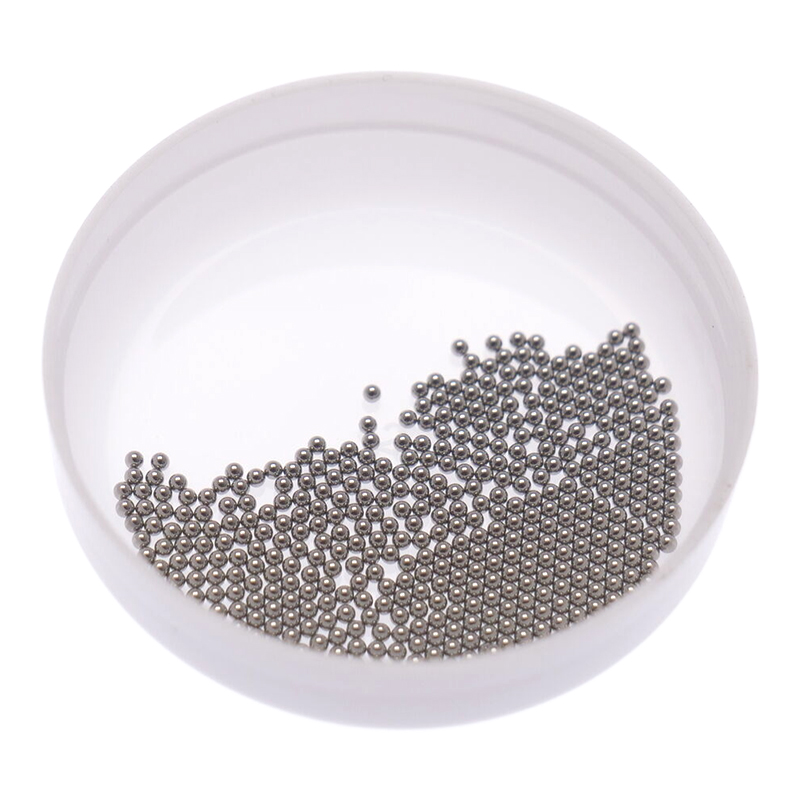
Component failure in demanding environments carries massive hidden risks. A single degraded bearing or stuck valve can completely halt production lines. It can easily contaminate sensitive product batches. In extreme cases, compromised components trigger catastrophic mechanical breakdowns. You risk severe operational disruptions when you rely on inadequate materials.
You might consider standard carbon alloys or industrial plastics for everyday applications. However, extreme settings demand much more. Corrosive chemicals, high structural loads, and rigorous sterilization protocols destroy standard materials. These harsh environments require precision-engineered solutions. You must rely on advanced metallurgy to keep systems running smoothly.
You need a strict evaluation framework to ensure equipment longevity and regulatory compliance. We will guide you through the exact process of specifying these components. You will learn how to select the precise grade of Stainless Steel Balls to secure your operational baseline.
Key Takeaways
Material Trade-offs: Selecting the right alloy requires balancing corrosion resistance (300-series) with load-bearing hardness (400-series).
Industry Compliance: Specific applications—from agricultural machinery to cosmetic dispensers—demand precise material certifications (e.g., FDA-compliant 316L) to meet regulatory and performance baselines.
Sourcing Validation: Procurement teams must verify precision grades (G10–G1000) and request Mill Test Reports (MTRs) to ensure material authenticity.
The Operational Impact of Component Failure in Demanding Environments
Standard materials simply cannot survive in aggressive industrial environments. Carbon steel lacks the necessary protective oxide layers. It deteriorates rapidly when exposed to aggressive chemicals. Moisture causes immediate oxidation. Extreme temperatures accelerate this destructive process.
Pitting presents a major threat to carbon steel. Tiny localized holes form on the metal surface. These microscopic craters act like grinding paste inside bearing raceways. Galvanic corrosion also occurs frequently. This happens when different metals interact in a wet environment. It strips away structural integrity and causes rapid mechanical degradation.
Operational Repercussions
Material degradation directly drives negative business outcomes. You cannot ignore the operational fallout.
Unplanned Maintenance Downtime: Continuous-process manufacturing relies on seamless operation. A single fractured bearing forces an immediate system halt. Teams must pause operations to swap out degraded parts. This wrecks production schedules.
Sanitation Breaches and Recall Risks: Food and pharmaceutical processing requires absolute purity. Rust flakes easily enter the product stream. Bacterial buildup occurs in pitted metal surfaces. This leads to immediate product recalls. It damages brand reputation severely.
End-User Dissatisfaction: Consumer goods depend on reliable mechanics. Seized mechanisms frustrate users immediately. A jammed pump or stuck roller ruins the entire product experience.
The Baseline Requirement
Adopting advanced alloys is not an optional operational upgrade. It remains a strict baseline requirement for risk mitigation. You must secure structural integrity from the inside out. Upgrading your core components prevents systemic mechanical failure. It ensures compliance and operational stability.
Evaluating Material Grades: Features-to-Outcomes Framework
No single metallurgical grade perfectly suits every application. You must align the specific alloy with your exact environmental conditions. Let us examine the two primary categories.
Austenitic Series (304, 316, 316L) – Maximum Corrosion Resistance
Austenitic grades dominate environments requiring intense chemical resistance. They contain high levels of nickel and chromium. This composition forms a robust, self-healing passive layer.
These grades are mostly non-magnetic. They handle aggressive washdowns easily. The 316L variant includes molybdenum for superior protection against chlorides. It resists pitting better than almost any standard alloy.
They provide optimal outcomes for sterile environments. However, you must accept certain trade-offs. The 300-series offers lower load-bearing capacity. The surface remains relatively soft compared to hardened alternatives. They cannot endure massive impact forces.
Martensitic Series (420, 440C) – High Hardness and Wear Resistance
Martensitic grades serve entirely different mechanical purposes. They feature higher carbon content. Manufacturers heat-treat these alloys to achieve extreme hardness.
They exhibit strong magnetic properties. You will find them primarily in precision bearings and high-friction mechanisms. They withstand intense mechanical stress effortlessly.
These grades excel in high-impact environments. The main trade-off involves corrosion resistance. The higher carbon reduces their chemical tolerance. They rust faster than the 300-series when exposed to harsh acids or saltwater.
Material Grade Comparison Chart
Alloy Series
Key Features
Primary Strengths
Notable Trade-offs
Austenitic (304, 316, 316L)
High nickel, non-magnetic, low carbon
Maximum corrosion resistance, sterile
Lower load capacity, softer surface
Martensitic (420, 440C)
High carbon, magnetic, heat-treated
Extreme hardness, wear resistance
Lower chemical tolerance
Industry-Specific Success Criteria and Application Alignment
Different sectors face entirely unique operational challenges. You must match the alloy profile to your industry parameters. Precision engineering requires exact material alignment.
Heavy Industry and Agriculture
Agricultural equipment operates in brutal conditions. Machinery constantly battles soil, organic fertilizers, and aggressive moisture. Abrasive particulates enter mechanical linkages constantly.
Nitrogen-based fertilizers accelerate metal decay rapidly. Mud and grit act as abrasive compounds. These elements destroy standard bearings within weeks.
You need hardened martensitic grades here. Alloys like 440C resist the abrasive grinding action of soil. Heavy industry also utilizes custom-drilled steel spheres for specific mechanical linkages. These modified components ensure durable valve operations in tractors and irrigation systems.
Food Processing and Medical Equipment
The food and medical sectors tolerate absolutely zero contamination. Regulatory bodies enforce strict FDA compliance. Equipment faces aggressive sanitation chemicals daily. Clean-in-Place (CIP) systems spray harsh caustics directly onto components.
Any surface imperfection harbors dangerous bacteria. You cannot risk biofilm buildup in these critical environments.
The 316L grade provides the ultimate solution. It delivers superior pitting resistance against strong cleaning agents. Manufacturers prioritize a high surface finish. A very low roughness average (Ra) prevents microscopic bacteria traps. This ensures total sanitation compliance and patient safety.
Cosmetic Dispensing Equipment
Cosmetic packaging contains incredibly complex chemical formulations. Pumps and dispensers interact directly with salicylic acids, volatile essential oils, and concentrated alcohols. Standard metals quickly react with these compounds.
This interaction causes formula contamination. It degrades the fragrance profile. Inferior metals also create rust discoloration inside clear bottles. A jammed pump mechanism frustrates the consumer instantly.
You solve this by deploying highly polished 304 or 316 grades. We strongly recommend specifying exact Stainless Steel Balls for Cosmetic Equipment. These specialized components prevent any chemical interaction. They ensure precise liquid dosing. They completely eliminate the risk of unsightly rust discoloration in high-end beauty products.
Lifecycle Maintenance and Operational Longevity
Equipment lifespan relies entirely on component durability. Upgrading your internal materials radically changes your maintenance schedule. You must assess the lifecycle value of premium alloys over standard alternatives.
Extending Maintenance Frequencies
Carbon steel demands intense oversight. Wet environments force technicians to lubricate components constantly. You must monitor standard bearings closely for early signs of failure. Moisture penetration forces frequent part replacements.
Premium alloys offer a "fit-and-forget" operational lifespan. The passive chromium layer protects the component automatically. You drastically reduce the need for manual lubrication. Maintenance teams can redirect their focus toward optimization rather than emergency repairs.
Risk Mitigation and Reliability
Unreliable components expose your operation to massive risks. Sudden mechanical seizures stop manufacturing completely. Contaminated batches lead directly to regulatory fines.
Deploying superior metallurgy acts as a physical insurance policy. You protect the production line against sudden downtime. You shield pharmaceutical and food batches from hidden rust flakes. This proactive approach ensures continuous output and safeguards product integrity.
Shortlisting Suppliers: Implementation Risks and Purchasing Logic
Procuring raw materials requires diligent verification. The market contains counterfeit alloys and poorly machined alternatives. You must evaluate suppliers meticulously to ensure component authenticity.
Precision Grade Specifications
You must choose the exact tolerance required for your machinery. The AFMA/ABMA grading scale dictates component roundness and surface perfection. A lower grade number indicates higher precision.
Grade 10 spheres deliver near-perfect sphericity. They suit high-speed industrial bearings flawlessly. They prevent vibration at extreme RPMs. Conversely, Grade 1000 spheres offer looser tolerances. They work perfectly for simple fluid agitation tasks, like mixing paint or nail polish.
Customization Capabilities
Standard spheres do not fit every proprietary design. Many modern assemblies require specialized manufacturing.
Evaluate your supplier's machining capabilities. Can they provide drilled or tapped variants? Some applications demand threaded inserts. Others require specialized chemical coatings. Ensure the manufacturer handles these specific modifications in-house to maintain quality control.
Verification and Trust Framework
Supply chain transparency matters more than ever. Sub-spec alloys look identical to premium grades upon visual inspection. You cannot rely on surface appearance.
Follow this strict verification logic:
Demand Mill Test Reports (MTRs): These documents prove the exact chemical composition. They confirm the correct levels of chromium and nickel. They validate the heat treatment process.
Verify ISO Certifications: Ensure the facility operates under recognized quality management systems. This guarantees consistent manufacturing standards.
Request Dimensional Inspection Data: Ask for optical measurement reports. This verifies the batch meets your required precision grade before installation.
Conclusion
Specifying the correct metallurgical component serves as a critical engineering decision. The specific harshness of your application dictates your exact material requirements. Relying on standard alloys in aggressive environments guarantees eventual mechanical failure.
Here are the key actions you must take:
Select Austenitic grades for maximum chemical resistance and sterilization needs.
Deploy Martensitic grades to endure extreme physical friction and heavy loads.
Demand comprehensive Mill Test Reports from your supplier to block counterfeit materials.
Consult with a metallurgy expert to match the exact precision grade to your operational RPMs.
Take the next step in securing your equipment. Review your technical spec sheets immediately. Request material samples to run controlled environmental tests. Upgrading your internal components today prevents catastrophic operational failures tomorrow.
FAQ
Q: Are all stainless steel balls non-magnetic?
A: No. Austenitic grades (like 304 and 316) lack strong magnetic properties due to their high nickel content. However, martensitic grades (like 420 and 440C) contain elevated carbon levels and lack nickel. This specific microstructure makes them heavily magnetic. You must verify the alloy family to prevent unwanted magnetic interference.
Q: How do I choose between 304 and 316 stainless steel for fluid control?
A: It depends on the fluid's chemical aggressiveness. Grade 304 handles basic water and mild chemicals perfectly. You must upgrade to 316 if the fluid contains harsh chlorides, salts, or strong acids. Grade 316 contains molybdenum, which drastically improves its resistance against localized pitting.
Q: What precision grade do I need for high-speed industrial bearings?
A: You generally require Grade 10 or Grade 25. The AFMA/ABMA grading scale measures sphericity and surface roughness. Lower numbers indicate much tighter tolerances. High-speed applications demand extreme roundness to prevent severe vibration, reduce friction, and ensure smooth operational rotation.
Q: Can I request custom modifications like drilled stainless steel balls?
A: Yes. Advanced manufacturers frequently modify standard spheres. They can drill, tap, or thread these components to fit specialized mechanical linkages. However, you must confirm that the supplier can machine the specific hardened alloy you select without compromising its structural integrity.
With advanced production equipment and state-of-the-art testing instruments, our commitment to quality permeates every phase of production, from inception to final delivery.