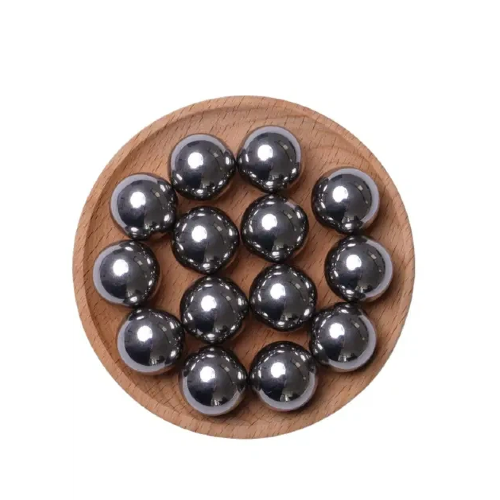
Bearing steel balls are essential components in many mechanical systems, reducing friction and ensuring smooth operation in a variety of industries. These small yet powerful balls play a significant role in maintaining the efficiency and durability of machinery and equipment. This guide aims to provide a comprehensive overview of bearing steel balls, focusing on their materials, grades, and applications across different sectors.
Whether you're new to bearing technology or an expert looking to refresh your knowledge, this article will equip you with the necessary insights to understand the importance of bearing steel balls in modern engineering.
1. What Are Bearing Steel Balls?
Definition and Basic Features
Bearing steel balls are small spherical components made from various types of steel, primarily designed to reduce friction and wear between moving parts in mechanical systems. They are typically used in bearing assemblies, where they facilitate smooth rotational or linear motion. The design of bearing steel balls helps to minimize contact between moving parts, which reduces friction, improves efficiency, and extends the life of the equipment.
These balls can be made from different materials, each with specific properties that make them suitable for particular applications. Their precise manufacturing ensures that they can handle high-speed rotations, heavy loads, and various environmental conditions.
Types of Bearing Steel Balls
Bearing steel balls come in several types, depending on the material used to produce them. The most common types include:
Chrome Steel Balls: Known for their high hardness and wear resistance, these are the most widely used bearing steel balls.
Stainless Steel Balls: These offer superior corrosion resistance and are ideal for use in harsh environments.
Carbon Steel Balls: A more affordable option, these are used in less demanding applications where corrosion resistance is not a priority.
Each type of bearing steel ball is designed to meet specific requirements, and choosing the correct type depends on the operational conditions.
2. Materials Used in Bearing Steel Balls
The material used to make bearing steel balls is one of the most important factors that determine their performance. Different materials offer varying degrees of hardness, corrosion resistance, and load-bearing capabilities. Below, we’ll explore the most commonly used materials for bearing steel balls:
Chrome Steel (52100 Steel)
Chrome steel, commonly referred to as 52100 steel, is the most popular material used for bearing steel balls. It is known for its excellent wear resistance, high hardness, and ability to withstand high pressures. Chrome steel balls are commonly used in high-performance bearings where durability and reliability are critical.
Hardness: Typically between 60 to 65 HRC (Rockwell Hardness)
Applications: Automotive industry, high-speed machinery, industrial equipment
Stainless Steel
Stainless steel bearing balls are favored for their corrosion-resistant properties. They are ideal for use in environments where moisture, chemicals, or other corrosive elements are present. Stainless steel offers lower hardness compared to chrome steel but excels in resistance to rust and oxidation.
Hardness: Around 55-60 HRC
Applications: Food processing, medical equipment, pharmaceutical industries
Carbon Steel
Carbon steel balls are typically used in lower-cost applications where high load-bearing capabilities are needed but corrosion resistance is not a priority. While carbon steel balls are not as resistant to corrosion, they provide good performance in dry and non-corrosive environments.
Other Materials
In certain high-performance applications, bearing steel balls may be made from specialized alloys or materials designed for specific environments. For example, ceramic balls, while not made from steel, are used in applications where weight and thermal expansion are crucial.
3. Bearing Steel Ball Grades
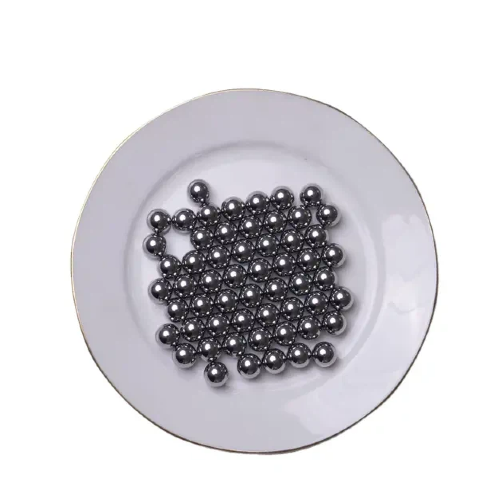
Bearing steel ball grades play a crucial role in determining the precision and performance of the bearing system. The grade of a bearing steel ball refers to its dimensional tolerance and surface finish, with higher grades providing better precision and smoother operation.
Grade 10 to Grade 1000
Bearing balls are categorized by grades, with Grade 10 representing the highest level of precision and Grade 1000 the lowest. The grade indicates the permissible size deviation and surface roughness, which directly affects the performance of the bearing.
Here’s a breakdown of the most common bearing ball grades:
Grade | Tolerance | Applications |
Grade 10 | ±0.0001 inches (0.00254mm) | High-precision applications such as aerospace, medical, and optical devices. |
Grade 25 | ±0.00025 inches (0.00635mm) | Precision bearings for automotive and high-speed machinery. |
Grade 100 | ±0.0005 inches (0.0127mm) | General-purpose bearings for industrial equipment. |
Grade 1000 | ±0.002 inches (0.0508mm) | Suitable for lower-cost applications with less stringent precision requirements. |
Common Grade Standards
In addition to the above grades, bearing steel balls are often classified according to international standards, such as:
ABEC: The Annular Bearing Engineers' Committee (ABEC) standards are used for bearings in the United States. ABEC 1 to ABEC 9 represent increasing levels of precision.
ISO: The International Organization for Standardization (ISO) provides a global standard for bearing tolerances and performance.
DIN: The Deutsches Institut für Normung (DIN) provides standards in Europe for bearing tolerances and testing.
Selecting the Right Grade for Your Application
Choosing the right grade of bearing steel ball depends on the specific application. High-speed, high-precision machinery, such as in aerospace or medical devices, requires Grade 10 or Grade 25 bearings, whereas industrial applications may be able to use Grade 100 or Grade 1000 depending on the required precision.
4. Applications of Bearing Steel Balls
Bearing steel balls are used in a wide range of industries due to their versatility, durability, and precision. Below are some of the most common applications:
Industrial Machinery
In industrial machinery, bearing steel balls are used in conveyor systems, turbines, motors, and various other mechanical systems. These systems require smooth motion, high load-bearing capacity, and durability. The ability of bearing steel balls to reduce friction makes them ideal for high-speed applications in industrial settings.
Automotive Industry
Bearing steel balls are crucial components in automotive bearings. These bearings are used in engines, wheels, transmissions, and other critical systems in vehicles. Their ability to withstand high loads and provide smooth, reliable operation is essential for the performance and safety of modern vehicles.
Medical Equipment
In the medical industry, bearing steel balls are used in devices such as surgical instruments, prosthetics, and diagnostic equipment. Their precision, cleanliness, and resistance to corrosion make them ideal for use in sterile and high-precision medical environments.
Aerospace and High-Speed Applications
The aerospace industry requires components that can operate under extreme conditions, including high speeds, temperature variations, and intense pressure. Bearing steel balls are used in bearings for aircraft engines, turbines, and control systems to ensure smooth operation under these challenging conditions.
Consumer Products
Bearings made with bearing steel balls are also used in everyday products like bicycles, rollerblades, and even toys. In these applications, the bearing steel balls ensure smooth, efficient movement, contributing to the product’s overall performance and longevity.
5. How to Choose the Right Bearing Steel Ball for Your Application
Selecting the right bearing steel ball for a specific application requires careful consideration of several factors:
Key Factors to Consider
Load and Speed Requirements: High-speed applications, such as motors and turbines, require bearing steel balls that can handle fast rotations without compromising durability. Similarly, high-load applications, like industrial machinery, need bearings that can support substantial weight without deformation.
Environmental Conditions: If the bearing will be exposed to moisture, chemicals, or extreme temperatures, stainless steel or other corrosion-resistant materials may be preferred. For dry, non-corrosive environments, carbon steel or chrome steel might be suitable.
Precision and Tolerance: For industries like aerospace and medical equipment, where precision is crucial, selecting higher-grade bearing steel balls (e.g., Grade 10 or Grade 25) ensures that the system operates smoothly without excessive wear.
6. Conclusion
Bearing steel balls are essential components in a wide range of mechanical systems, addressing challenges related to friction, wear, and overall efficiency across various industries. A clear understanding of the materials, grades, and specific applications of these bearings is crucial when selecting the right product to optimize performance. By carefully considering the material type, grade, and application needs, you can ensure that your bearing steel balls perform at their best, whether in high-speed machinery or heavy-duty industrial equipment.
At Ningyang Qisheng Industry and Trade Co., Ltd., we offer a variety of high-quality bearing steel balls tailored to meet diverse industrial requirements. With our expertise and commitment to excellence, we can help you choose the right product that guarantees reliability and optimal performance. Whether you're looking for precision bearings for high-speed applications or durable solutions for heavy loads, we provide the solutions you need. For more information or to discuss your specific needs, don't hesitate to reach out to our team today. We are here to assist you in selecting the perfect bearing steel balls for your business.
7. FAQ
1. What is the difference between chrome steel and stainless steel bearing balls?
Chrome steel bearing balls are harder and more wear-resistant than stainless steel balls. However, stainless steel offers better corrosion resistance, making it ideal for moist or chemically aggressive environments.
2. What do bearing steel ball grades mean?
Bearing steel ball grades refer to the precision and tolerance of the ball. Higher-grade balls, such as Grade 10, are used in high-precision applications, while lower grades are suitable for less demanding environments.
3. Can bearing steel balls be used in extreme environments?
Yes, bearing steel balls made from stainless steel or specialized alloys can handle extreme conditions, such as high temperatures, moisture, or chemical exposure.
4. How does the precision of bearing steel balls affect their performance?
Higher precision bearings provide smoother operation, reduced friction, and better performance, especially in high-speed or high-precision applications like aerospace and medical equipment.
5. How do I choose the right bearing steel ball for my industry?
Consider factors such as load, speed, environmental conditions, and the required precision when selecting the right bearing steel ball. Higher grades are needed for high-precision or high-speed applications, while lower grades may be sufficient for general industrial use.


