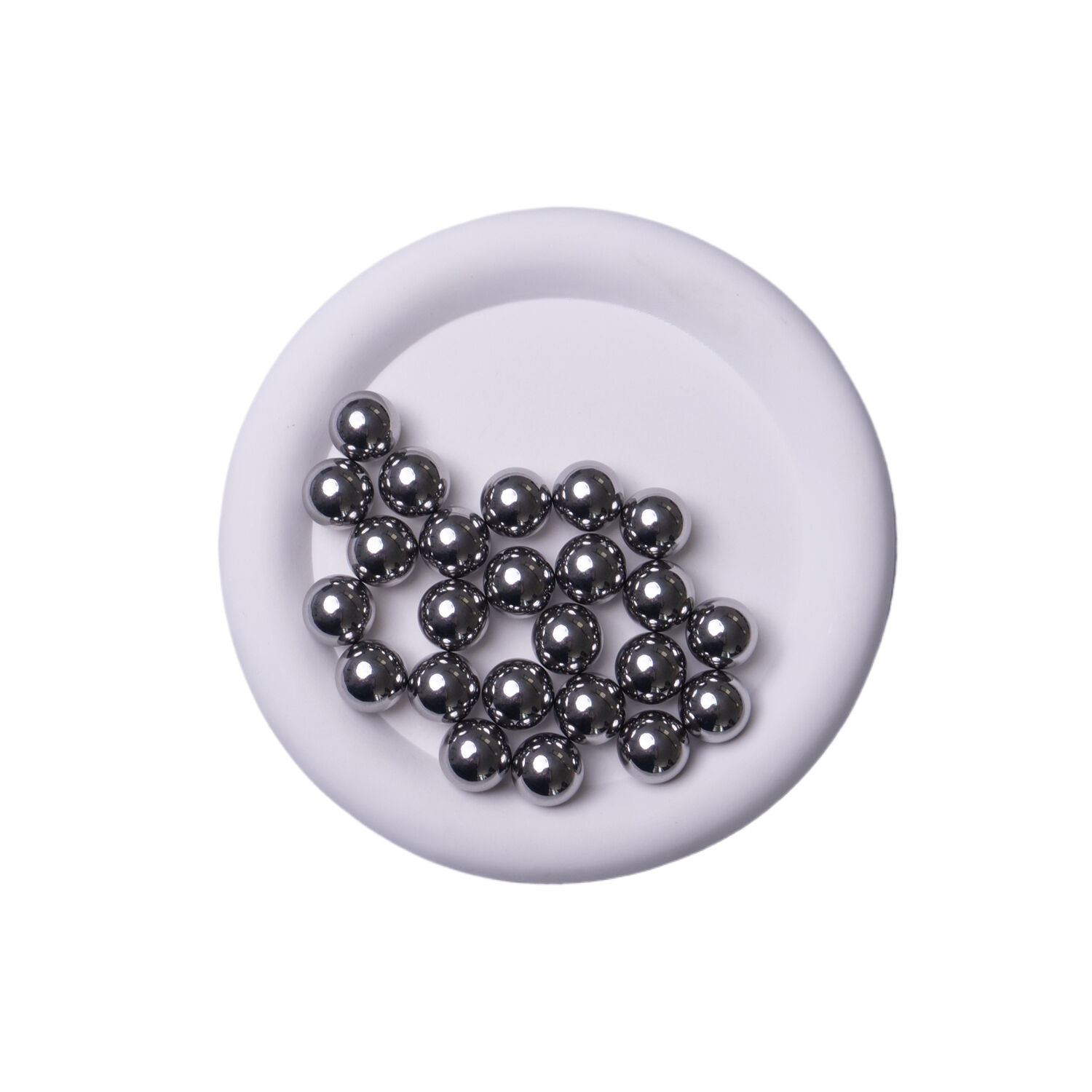
In harsh industrial environments such as chemical processing, food production, and marine settings, standard bearing materials rapidly degrade. This rapid degradation leads to catastrophic machinery failure and unacceptable downtime. Operations halt entirely when internal components cannot withstand aggressive chemical or thermal exposure.
Engineers must constantly balance corrosion resistance against overall load capacity and fatigue life. Selecting the wrong internal components ultimately compromises the entire mechanical system. You cannot afford unexpected breakdowns caused by inferior rolling elements failing under pressure.
Moving from initial evaluation to final specification requires a clear understanding of material trade-offs and operational constraints. We will explore precise evaluation metrics for internal components, focusing specifically on Bearing Steel Balls. Readers will learn how to match metallurgical properties to severe operational environments effectively and prevent premature equipment failure.
Key Takeaways
Material Trade-offs: Maximum corrosion resistance (e.g., 316 stainless) often requires sacrificing dynamic load capacity compared to harder, martensitic grades (e.g., 440C).
Application-Specific Compliance: Food, beverage, and pharmaceutical applications require specific washdown-rated materials and FDA-compliant lubrication strategies.
Failure Mitigation: Most premature failures in demanding applications stem from poor lubrication retention, thermal expansion mismatches, or galvanic corrosion—not baseline material defects.
Procurement Standard: Accurate specification of bearing steel balls for mechanical parts requires verifiable material test reports (MTRs) and strict tolerance grading.
The Cost of Failure: Framing the Need for Specialized Components
Bearing failure in demanding machinery triggers severe cascading consequences. When a primary bearing locks up, it immediately stops production lines. Unplanned downtime leads to massive operational losses. Furthermore, degraded bearings shed metallic particles into the processing environment. This contamination ruins entire product batches and creates significant safety hazards for operators.
Standard chromium steel, specifically grade 52100, dominates conventional environments. It offers exceptional hardness and excellent wear resistance under normal conditions. However, standard chromium steel fails rapidly in extreme environments. It rusts almost immediately upon exposure to moisture. Aggressive chemicals cause deep pitting along the steel surface. This chemical pitting destroys the smooth geometry required for frictionless rotation. Therefore, high-grade stainless alternatives become absolutely necessary for survival.
The integrity of the rolling element serves as the primary bottleneck for continuous operation. Bearings concentrate immense mechanical stress onto tiny contact points. If extreme stress combines with corrosive exposure, the rolling elements suffer micro-fractures. Once a single ball loses its spherical perfection, it aggressively carves into the raceway. The entire mechanical assembly then tears itself apart from the inside out.
Evaluating Bearing Steel Balls for Mechanical Parts: Core Dimensions
Engineers face strict metallurgical trade-offs when selecting alloys. You must choose between austenitic and martensitic crystalline structures based on environmental demands.
The 400 series alloys, such as 440C, feature high carbon content. They are highly heat-treatable. This treatment yields excellent hardness and exceptional dynamic load capacity. However, they only provide moderate corrosion resistance. They remain the best choice for heavy mechanical loads where moisture exposure is intermittent.
The 300 series alloys, such as 316, feature low carbon content. They possess a non-magnetic, austenitic structure. They deliver superior corrosion resistance against harsh acids and chlorides. The trade-off involves significantly lower load capacity and reduced speed limits. They operate best in highly corrosive, low-load environments.
Alloy Type
Microstructure
Corrosion Resistance
Load Capacity
Primary Use Case
440C Stainless
Martensitic
Moderate
High
Heavy loads, mild moisture
316 Stainless
Austenitic
Superior
Low
Harsh chemicals, low speeds
52100 Chrome
Martensitic
Poor
Very High
Standard dry environments
Precision directly impacts fatigue life. Manufacturers grade spherical perfection using ABEC and ISO standards. Microscopic surface imperfections in Bearing Steel Balls for Mechanical Parts create uneven load distribution. In high-speed applications, these localized stress points quickly propagate into deep fractures.
Thermal tolerance introduces another critical evaluation dimension. Machinery operating across extreme temperature deltas experiences structural shifting. Stainless steel alloys expand and contract at different rates. You must calculate precise internal clearances to prevent bearing lockup during high-temperature operations.
Industry-Specific Decision Criteria and Compliance Requirements
Different industrial sectors impose unique environmental stresses on rolling elements. A universal bearing specification does not exist. You must align component metallurgy directly with sector-specific operational realities.
Food processing and beverage facilities deploy highly aggressive cleaning protocols. Equipment endures high-pressure, high-temperature chemical washdowns daily. Engineers must balance strict FDA and USDA compliance against mechanical longevity. Materials must resist caustic cleaning agents while maintaining structural integrity.
Chemical processing and marine industries battle constant chloride exposure. Chlorides actively attack protective oxide layers on steel surfaces. This attack initiates stress corrosion cracking and localized pitting.
Cleanroom and pharmaceutical manufacturing environments demand uncompromising purity. These sectors enforce strict baseline requirements for all mechanical sub-assemblies.
Best Practices: Always consult the IP69K standards when designing assemblies for high-pressure washdown environments. Specify sealed bearings filled with H1 food-grade lubricants for all FDA-regulated zones.
Implementation Risks: What the Spec Sheet Won't Tell You
Theoretical specifications often fail to predict actual field performance. Real-world machinery exposes hidden vulnerabilities in mechanical designs. You must engineer proactive solutions to address these hidden implementation risks.
Demanding applications frequently fail due to lubrication washout or starvation. Expelled or degraded grease destroys bearings faster than baseline material failure. High-pressure water easily bypasses standard rubber seals. It emulsifies the grease and leaves metal grinding against metal. Engineers should implement solid lubricants or highly specialized labyrinth seals to retain essential lubrication.
Galling and cold welding present massive risks for stainless steel components. Stainless steel possesses a high tendency to friction-weld to itself under heavy loads. Thread galling occurs during installation. Ball-to-raceway micro-welding happens during operational micro-slippage. You must engineer appropriate internal clearances and apply anti-seize compounds to prevent it.
Galvanic corrosion destroys housings prematurely. This occurs when you mount stainless steel bearings into dissimilar metal housings, such as aluminum. If an electrolyte like saltwater bridges the two metals, the less noble metal dissolves. The aluminum housing will sacrifice itself to the stainless steel, causing the bearing to loosen and vibrate catastrophically.
Common Mistakes: Over-packing a bearing cavity with grease causes excessive thermal buildup. Do not assume high-grade stainless alloys eliminate the need for proper isolation barriers between dissimilar metals.
Shortlisting Framework: Specifying the Right Bearing Steel Balls
Engineers require a structured methodology to evaluate and select internal components. Guesswork leads to inevitable system failures. You must formulate an evaluation matrix based on specific operating metrics.
Define your baseline success metrics first. Gather accurate data covering total operating hours, maximum RPM, and dynamic versus static loads. Cross-reference these mechanical loads against specific environmental exposures like pH levels and peak operating temperatures. This matrix guides your metallurgical selection accurately.
Component Evaluation Matrix
Evaluation Metric
Low Stress Environment
Extreme Environment
Operating RPM
Standard clearances suffice
Requires high-precision ABEC grading
Corrosive Exposure
Intermittent moisture
Continuous acid/chloride immersion
Temperature Delta
Stable ambient
High variance (requires thermal modeling)
Load Profile
Static / Low vibration
High dynamic shock loads
Supplier verification represents a critical procurement step. You must demand verified Material Test Reports (MTRs) from your manufacturing partners. MTRs, specifically EN 10204 3.1 certificates, confirm the exact chemical composition of the steel batch. You must verify strict lot traceability. This prevents substandard alloys from sneaking into critical mechanical assemblies.
Prototyping and field testing validate your mathematical models. Theoretical load calculations provide a starting point. They cannot replicate chaotic field variables. Move your designs into controlled field testing. Expose the prototypes to actual harsh environments before approving full-scale machinery integration.
Conclusion
Specifying stainless steel bearings for harsh environments is an exercise in managing calculated trade-offs. You must balance required hardness against necessary chemical resistance and thermal stability. A singular focus on one metric often compromises the entire system.
Do not over-specify for hardness if corrosion represents the primary failure mode. Harder steel generally rusts faster. Rely strictly on application-specific environmental data to guide your metallurgical choices. Build redundant protections like advanced sealing technology to protect the core components.
Take proactive steps to secure your mechanical systems today. Consult with specialized engineering teams regarding your specific operational environment. Request complete material data sheets from prospective suppliers immediately. Initiate a controlled pilot test for your specific mechanical assembly to validate performance before wide-scale deployment.
FAQ
Q: What is the difference between 440C and 316 bearing steel balls?
A: 440C is a martensitic alloy offering high hardness and excellent load capacity, but it provides lower corrosion resistance. 316 is an austenitic alloy providing maximum corrosion resistance against harsh chemicals. However, 316 is significantly softer, making it suitable only for lower mechanical loads and slower operational speeds.
Q: Can stainless steel ball bearings operate without lubrication?
A: Generally, no. Operating without lubrication creates a high risk of galling and extreme friction. However, specific highly regulated applications may utilize specialized dry film lubricants, such as PTFE or MoS2, in environments where traditional wet grease is strictly prohibited.
Q: How do you test the quality of bearing steel balls for mechanical parts?
A: Quality testing requires reviewing verifiable Material Test Reports (MTRs) to confirm alloy composition. Engineers also conduct Rockwell hardness testing and perform strict dimensional inspections using ABEC or ISO grading standards to verify exact sphericity and surface finish parameters.
Q: Are stainless steel bearings completely rust-proof?
A: No. Stainless steel alloys are highly corrosion-resistant, not strictly rust-proof. Prolonged exposure to specific aggressive chemicals, high-concentration chlorides, or oxygen-deprived wet environments can still cause localized pitting or rust. This remains especially true for 400-series martensitic alloys.
With advanced production equipment and state-of-the-art testing instruments, our commitment to quality permeates every phase of production, from inception to final delivery.