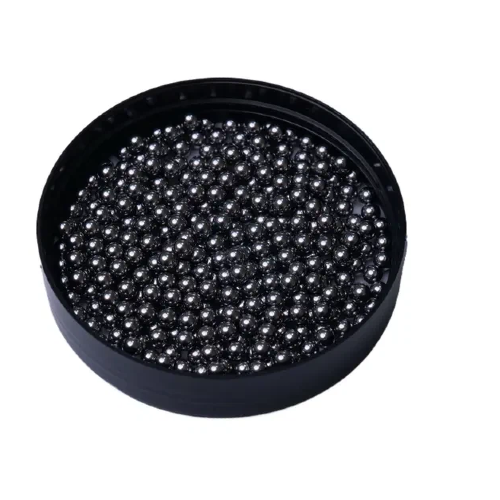
The chocolate manufacturing process relies heavily on the efficiency of fine grinding and conching to achieve that signature silky-smooth texture. At the heart of this process are grinding media, specifically high-quality steel balls that pulverize cocoa solids and sugar crystals into micron-sized particles. Selecting the right grinding media is not merely a matter of cost but a critical decision affecting food safety, wear resistance, and the final sensory profile of the confectionery product.
The primary difference between steel balls for chocolate grinding lies in their material composition, where Carbon Steel Ball options offer cost-effectiveness for darker chocolates, Chrome Steel provides superior hardness and wear resistance for high-efficiency milling, and Stainless Steel variants ensure maximum corrosion resistance and hygiene compliance for premium food-grade applications.
Understanding the nuances between these steel variants is essential for factory managers and production engineers aiming to optimize their ball mills. Each material reacts differently to the fatty acids in cocoa butter and the mechanical stress of continuous friction. This comprehensive guide will analyze the mechanical properties, chemical stability, and industrial suitability of Carbon Steel, Chrome Steel, and Stainless Steel balls to help you make an informed procurement decision for your chocolate production line.
Table of Contents
Comparison of Grinding Media Materials
The Role of Carbon Steel Ball in Chocolate Processing
High Precision Chrome Steel Balls for Efficient Milling
Stainless Steel Variants for Enhanced Food Hygiene
Key Factors Influencing Grinding Media Selection
Maintenance and Replacement Cycles for Steel Grinding Media
Future Trends in Chocolate Grinding Technology
Comparison of Grinding Media Materials
A comparative analysis of grinding media reveals that while Carbon Steel Ball is the most economical choice, Chrome Steel offers the highest hardness (HRC 60-66), and Stainless Steel provides the best protection against corrosion and chemical leaching during the chocolate conching process.
When selecting grinding media for food processing, engineers must balance the initial capital expenditure with the long-term operational costs associated with wear and tear. Carbon steel is often chosen for its high density and low price point, making it suitable for high-volume milling where the final product can tolerate minor metallic traces or where the chocolate has a lower moisture content. However, its susceptibility to rust remains a primary concern in humid processing environments.
Chrome steel, specifically AISI 52100, is the "workhorse" of the grinding industry. Its chrome content enhances through-hardening, meaning the ball maintains its integrity even as the surface wears down. In the context of chocolate grinding, this translates to consistent particle size distribution over longer production cycles. Because chocolate is a non-Newtonian fluid with specific viscosity requirements, the consistent shape of the grinding media is vital for maintaining flow characteristics.
Stainless steel variants represent the premium tier of grinding media. By incorporating nickel and higher levels of chromium, these balls resist the organic acids found in cocoa. While the 300-series stainless steel is softer and non-magnetic, the 400-series (such as 420C or 440C) can be heat-treated to achieve a hardness comparable to chrome steel. This allows for a unique combination of food safety and mechanical efficiency that is often required for high-end organic chocolate brands.
The Role of Carbon Steel Ball in Chocolate Processing
The use of a Carbon Steel Ball in chocolate grinding is primarily driven by its high density and cost-efficiency, making it a viable solution for pre-grinding stages or for manufacturers focusing on high-volume, cost-sensitive market segments.
A Carbon Steel Ball is manufactured from iron-carbon alloys, typically categorized into low, medium, and high carbon varieties. In the chocolate industry, high carbon steel balls are preferred because they can be hardened to withstand the repetitive impact and abrasion inside a ball mill or attritor. The primary advantage of using a Carbon Steel Ball is the weight-to-cost ratio. Since grinding efficiency is heavily dependent on the kinetic energy of the media, the high density of carbon steel ensures that cocoa nibs are pulverized effectively.
However, the lack of alloying elements like chromium makes the Carbon Steel Ball vulnerable to oxidation. If the chocolate mass contains any moisture or if the machinery is cleaned with water-based agents, the media can develop surface rust. This requires strict environmental controls and specialized storage protocols. Many manufacturers mitigate this by keeping the Carbon Steel Ball submerged in cocoa butter or oil to prevent air contact when the mills are not in operation.
Despite these challenges, the Carbon Steel Ball remains a staple in the industry. It is frequently used in the initial stages of refining where the particle size is still relatively large. By using a Carbon Steel Ball for the "rough" work and transitioning to more refined media for the final conching, factories can significantly reduce their overall media budget without sacrificing the final quality of the chocolate.
Cost Effectiveness: Carbon steel provides the lowest price per kilogram, allowing for large-scale mill charging.
High Density: The weight of the balls ensures high impact energy for breaking down tough cocoa solids.
Surface Hardness: Through specialized heat treatment, carbon steel can reach HRC 55-60, providing decent wear resistance.
High Precision Chrome Steel Balls for Efficient Milling
Chrome steel balls are recognized as the premium standard for chocolate grinding due to their exceptional hardness, high load-bearing capacity, and superior wear resistance which ensures a long service life and minimal contamination.
Chrome steel, often referred to as GCr15 or AISI 52100, contains approximately 1.5% chromium. This addition allows the steel to be through-hardened, resulting in a uniform structure from the surface to the core. In chocolate grinding, where the media is subjected to constant friction for 12 to 24 hours per batch, the durability of chrome steel is unmatched. Unlike a standard Carbon Steel Ball, chrome steel resists pitting and flattening, which is crucial for maintaining the precise 20-micron particle size required for premium chocolate.
The high-finish surface of chrome steel balls reduces the friction coefficient between the media and the chocolate paste. This means that less heat is generated during the grinding process. Excessive heat can "burn" the cocoa butter or alter the delicate flavor volatiles of the cocoa beans. By using chrome steel, manufacturers can maintain a more stable temperature profile within the ball mill, leading to a more consistent flavor and better "snap" in the finished chocolate bar.
Furthermore, the magnetic properties of chrome steel are a significant advantage in food safety. If a ball were to chip or break—though rare due to its toughness—magnetic separators at the end of the production line can easily detect and remove the fragments. This provides an extra layer of security that protects consumers and the brand's reputation from physical contaminants.
Superior Hardness: Reaching HRC 60-66, these balls experience minimal wear even in 24/7 operations.
Dimensional Stability: They maintain their spherical shape longer than carbon steel, ensuring consistent grinding results.
Thermal Efficiency: Lower friction levels help in managing the sensitive temperature of the chocolate mass.
Stainless Steel Variants for Enhanced Food Hygiene
Stainless steel grinding balls are the preferred choice for white chocolate and high-purity confectionery products because they eliminate the risk of metallic oxidation and comply with the most stringent global food safety regulations.
Stainless steel is categorized into different grades, each offering a specific balance of hardness and corrosion resistance. For chocolate grinding, the most common variants are AISI 304, 316, and 440C. While 304 and 316 are austenitic and cannot be hardened significantly, they offer total immunity to the organic acids found in fermented cocoa. These are often used in specialized mixers or for lighter polishing tasks where high impact force is not the primary requirement.
For high-intensity grinding, AISI 420C or 440C martensitic stainless steel is utilized. These grades can be heat-treated to a hardness of HRC 52-58. While slightly less hard than chrome steel, they provide the "best of both worlds" by offering high grinding efficiency alongside excellent rust resistance. This is particularly important for factories that produce a variety of products, including those with higher moisture contents like fruit-filled chocolates or certain milk-based compounds.
The use of stainless steel also simplifies the cleaning and sanitation process (CIP). Because the media does not rust, it can be cleaned with food-grade detergents and water without the fear of degrading the surface. This reduces the downtime between flavor changes, such as moving from a dark chocolate batch to a white chocolate batch, where any residual dark material or rust would be highly visible and undesirable.
Non-Reactive Nature: Stainless steel does not react with the fats and acids in cocoa, preserving the authentic taste.
Regulatory Compliance: Meets FDA and European food contact material standards naturally.
Versatility: Suitable for both dry and wet grinding processes across various confectionery types.
Key Factors Influencing Grinding Media Selection
Choosing between a Carbon Steel Ball, Chrome Steel, or Stainless Steel depends on a combination of factors including the desired final particle size, the chemical composition of the chocolate, and the specific type of milling equipment used.
The first factor to consider is the "fineness" goal. If the objective is to reach a particle size below 20 microns, the hardness of the media is paramount. In this scenario, Chrome Steel or high-grade 440C Stainless Steel is superior to a standard Carbon Steel Ball. Softer media will wear down faster, and the resulting "fines" (microscopic metal dust) can darken the chocolate or give it a metallic aftertaste.
Secondly, the type of chocolate matters. Dark chocolate has a higher concentration of cocoa solids which are abrasive, requiring harder media. White chocolate, on the other hand, is very sensitive to color contamination. Even the slight greyish tint that can come from carbon steel wear is unacceptable in white chocolate production, making Stainless Steel the only viable option.
Finally, the mechanical design of the mill—whether it is a horizontal ball mill, a vertical attritor, or a vibration mill—dictates the size and density of the balls needed. Heavier balls (high carbon or chrome) are better for high-viscosity pastes because they have the momentum to move through the thick liquid. Lighter stainless balls might be used in high-speed agitators where the velocity compensates for the lower mass.
Product Viscosity: Higher viscosity requires denser media like chrome or carbon steel.
Color Sensitivity: White or light chocolates mandate the use of stainless steel to avoid discoloration.
Production Budget: A Carbon Steel Ball offers the lowest entry cost for large-volume industrial lines.
Cleaning Requirements: If water-based cleaning is used, stainless steel is mandatory to prevent oxidation.
Maintenance and Replacement Cycles for Steel Grinding Media
Regular maintenance and a structured replacement schedule for grinding balls are essential to ensure consistent chocolate quality and to prevent damage to the internal liners of the ball mill.
Over time, all grinding media will experience wear. This wear manifests as a reduction in the diameter of the balls and a loss of perfect sphericity. As a Carbon Steel Ball or Chrome Steel ball shrinks, the total surface area available for grinding changes, which can lead to longer processing times and inconsistent texture. Manufacturers should implement a "top-off" procedure, where a measured amount of new media is added to the mill at regular intervals to maintain the correct charge volume.
Visual inspections should be conducted monthly. During these checks, the media should be screened to remove "undersized" balls or fragments. If these small pieces are not removed, they can clog the discharge screens of the mill or, worse, pass through into the final product. Using magnetic separators is a critical failsafe, but it should not replace the physical maintenance of the media itself.
The lifespan of the media depends on the material. Chrome steel generally lasts 20% to 30% longer than a standard Carbon Steel Ball under the same conditions. Stainless steel lifespan varies greatly depending on the grade, with 440C offering durability close to chrome steel, while 304/316 grades may wear faster if used in high-impact applications. Documenting the weight of the media added versus the volume of chocolate produced is a best practice for calculating the "wear rate" and predicting future procurement needs.
Monthly Screening: Remove misshapen or significantly small balls to maintain grinding efficiency.
Charge Volume Monitoring: Ensure the mill is loaded to the manufacturer's recommended percentage (usually 50-60% of volume).
Magnetic Separation: Constantly monitor magnetic traps for signs of accelerated media breakdown.
Future Trends in Chocolate Grinding Technology
The future of chocolate grinding media is moving toward specialized alloys and hybrid materials that combine the extreme hardness of ceramic with the fracture toughness of steel to meet the demands of ultra-fine confectionery.
As consumer demand for "ultra-smooth" chocolate grows, manufacturers are pushing the limits of traditional steel. We are seeing a rise in the use of cryogenic treatments for Chrome Steel and Stainless Steel. By cooling the balls to sub-zero temperatures during manufacturing, the molecular structure is rearranged to increase wear resistance even further. This technology aims to bridge the gap between the affordability of a Carbon Steel Ball and the extreme performance of expensive ceramic media.
Another trend is the development of "low-noise" grinding media. By optimizing the sphericity and surface polish of the balls, the acoustic output of the ball mill can be reduced, improving the factory environment for workers. Furthermore, as sustainability becomes a core pillar for food brands, the recyclability of the media is being scrutinized. Steel media, whether it is a Carbon Steel Ball or stainless variant, is 100% recyclable, giving it a significant environmental advantage over some synthetic or composite alternatives.
Finally, the integration of IoT (Internet of Things) in milling equipment allows for real-time monitoring of media health. Sensors can now detect changes in the vibration patterns of a mill that indicate the grinding media is becoming irregular or that the Carbon Steel Ball charge has dropped below optimal levels. This data-driven approach to maintenance is set to become the standard in the next decade of chocolate manufacturing.
With advanced production equipment and state-of-the-art testing instruments, our commitment to quality permeates every phase of production, from inception to final delivery.