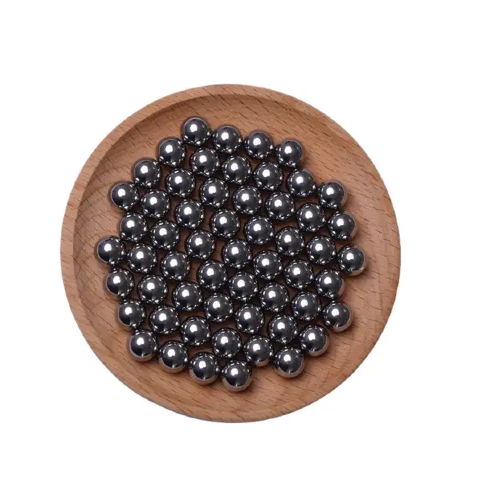
1. Overview of Stainless Steel Ball Precision and Tolerance
In industries that rely on precision engineering, Stainless Steel Balls play an essential role. Whether it's in automotive applications, ball bearings, or valve assemblies, these small components are critical for the functionality and performance of various machinery. The precision and tolerance of stainless steel balls directly affect their performance, including their ability to reduce friction, wear resistance, and the smooth functioning of mechanical systems.
Precision refers to the degree of consistency in the measurement of the balls' size, shape, and weight, while tolerance refers to the acceptable deviation from the nominal size. Achieving high precision and tight tolerance is crucial to ensuring that these components function as required, particularly in high-performance industries like aerospace, medical devices, and robotics.
In this article, we will explore the top five factors that influence the precision and tolerance of stainless steel balls, and why each of them is important for achieving optimal performance.
2. Material Quality and Composition
Role of Material Composition in Precision
The first and most fundamental factor affecting the precision and tolerance of stainless steel balls is the quality and composition of the material used. Stainless steel, by nature, offers excellent resistance to corrosion, oxidation, and wear, but not all grades of stainless steel are created equal. The chemical composition and purity of the steel directly influence its mechanical properties, which are essential for precision manufacturing.
Chromium: Stainless steel contains chromium, which contributes to its corrosion resistance. Higher levels of chromium lead to better resistance to rust and oxidation, which is critical for precision applications.
Nickel: Nickel provides strength, toughness, and ductility, which are necessary for the ball's durability and performance, especially under pressure.
Molybdenum: In grades like 316 stainless steel, molybdenum is added, enhancing resistance to chloride-induced corrosion, making it crucial for applications in harsher environments.
The purity of the material is just as important. Impurities, such as contaminants, can create irregularities in the finished product, making it difficult to maintain the required precision. These imperfections can lead to unwanted surface roughness or dimensional variations, ultimately compromising the ball's performance in precise applications.
Impact of Material Purity
High purity material helps avoid inconsistencies in the final product. For instance, impure steel can result in variations in hardness, causing one part of the ball to wear faster than others, which compromises both precision and tolerance.
Key Properties of Stainless Steel Affecting Precision
Property | Effect on Precision |
Chromium Content | Higher chromium content increases resistance to corrosion and wear. |
Nickel Content | Nickel improves toughness and dimensional stability under stress. |
Molybdenum | Essential for chloride resistance and maintaining structural integrity in harsh environments. |
3. Manufacturing Process
Different Manufacturing Techniques
The method used to produce stainless steel balls plays a crucial role in their precision and tolerance. The precision of stainless steel balls is highly influenced by the manufacturing techniques and the specific equipment used at each stage. Common manufacturing processes for stainless steel balls include:
Cold Heading: The process of cold heading involves shaping a stainless steel wire or billet into a ball shape through forging. This is often the first step in creating a high-precision ball. Cold heading helps establish the ball's basic dimensions but requires further processing to ensure the required tolerance.
Grinding: Once the rough shape is created, the balls undergo grinding to achieve more precise dimensions. Cylindrical grinding or centerless grinding is used to ensure that the balls are perfectly round, with minimal deviation from the target size.
Lapping: The final precision step is lapping, which involves a fine abrasive slurry used to polish the surface and remove any micro-level inconsistencies. Lapping is essential for achieving the high surface smoothness required for precision applications. This process also helps in fine-tuning the dimensional accuracy and ensuring the balls meet the tolerance requirements.
Precision in the Manufacturing Equipment
The machinery and tools used during manufacturing also play a significant role in ensuring precision and tolerance. For example:
Advanced CNC (Computer Numerical Control) machines allow for high levels of precision in grinding and lapping processes.
Automatic inspection systems ensure that any imperfections in the balls are detected and corrected immediately, ensuring consistency in size and shape.
Using state-of-the-art equipment and well-calibrated machinery ensures that the final product meets the required standards and tolerances. Inconsistent or outdated equipment may lead to dimensional variations, poor surface finishes, and reduced accuracy in stainless steel balls.
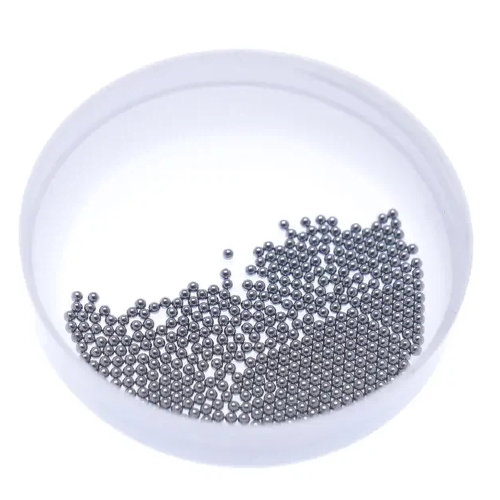
4. Surface Finishing and Polishing
Surface Treatments for Improved Tolerance
Surface finishing plays a vital role in determining the final precision of stainless steel balls. The smoothness of the ball’s surface is crucial in precision applications where friction and wear need to be minimized. The process of polishing and lapping ensures that the surface roughness is within acceptable limits and that any microscopic imperfections are removed.
Common surface finishing techniques include:
Lapping: A fine polishing process using an abrasive slurry that improves both the surface quality and dimensional precision.
Electropolishing: In some cases, electropolishing is used to remove a thin layer of material from the surface, which enhances both the surface finish and corrosion resistance. It also helps in achieving precise tolerances and a smooth finish, which is critical for applications requiring low friction.
How Surface Quality Affects Tolerance
A smooth surface enhances the ball's wear resistance, aesthetic quality, and functional longevity. Surface irregularities or roughness can increase friction, reduce durability, and affect performance in high-precision applications, such as bearings or medical devices. Polishing not only improves aesthetics but also reduces surface tension, which is vital for achieving the necessary precision and tolerance in the ball's dimensions.
5. Inspection and Quality Control
Role of Inspection in Achieving Precision
The importance of inspection and quality control in stainless steel ball production cannot be overstated. High-precision inspection techniques ensure that every ball meets the required dimensional standards and tolerances. Various measuring tools are used at different stages of the manufacturing process to monitor the ball's diameter, roundness, surface finish, and weight.
Micrometers, calipers, and laser measuring systems are commonly used to check the diameter and roundness of each ball. Laser-based systems provide non-contact measurement, ensuring high accuracy without damaging the balls. Automated systems are often employed to provide real-time feedback during the production process, ensuring continuous compliance with quality standards.
Quality Control Measures
To ensure high precision and tolerance, manufacturers must implement strict quality control measures. This includes:
In-process inspections at various stages of the manufacturing process.
Final inspection to ensure that all balls meet the required precision.
Statistical Process Control (SPC), which allows for monitoring and controlling the production process to prevent defects and ensure uniformity in the final product.
6. Environmental Factors
Impact of Temperature and Humidity
The environmental conditions during production and storage can significantly affect the precision and tolerance of stainless steel balls. Temperature and humidity fluctuations can cause stainless steel to expand or contract, leading to slight changes in ball dimensions. This is particularly important for precision applications, where even a small deviation in size can affect the performance.
High temperatures can cause the metal to expand, altering its dimensional stability.
Low humidity or extreme moisture conditions can cause oxidation or rust, potentially compromising the ball’s finish and dimensional stability.
Handling and Storage Conditions
Once manufactured, the stainless steel balls must be stored in controlled environments to prevent damage. Balls should be handled carefully to avoid deforming or scratching the surface, which can affect their precision. Proper storage helps maintain the dimensional integrity of the balls and ensures that they meet the required tolerances when ready for use.
7. Conclusion
In conclusion, achieving high precision and tight tolerance in stainless steel balls requires a comprehensive approach, addressing factors such as material quality, manufacturing techniques, surface finishing, inspection, and environmental conditions. Each stage of the production process plays a vital role in determining the ball's final precision and performance.
At Ningyang Qisheng Industry and Trade Co., Ltd., we understand the importance of these factors and ensure that every stainless steel ball meets the highest standards of quality and precision. Our expertise in controlling these critical aspects allows us to deliver stainless steel balls that perform reliably across various high-precision applications, including automotive, medical devices, and industrial machinery.
If you are looking for stainless steel balls that meet your exact specifications, we are here to assist. Feel free to contact us for further information on how our products can support your business needs. Our team is ready to provide tailored solutions for your applications, ensuring you receive the highest quality stainless steel balls for your projects.
8. FAQ
Q1: What is the ideal tolerance for stainless steel balls used in precision applications?
Tolerances can range depending on the specific application, but high-precision stainless steel balls typically require tolerances of ±0.001mm to ±0.005mm, particularly in industries like aerospace and medical devices.
Q2: How does the choice of stainless steel grade affect ball precision?
Different grades of stainless steel, such as 304 and 316, have different properties that can impact precision. Higher-quality alloys with more consistent material properties typically result in higher precision.
Q3: Can the manufacturing process be adjusted to achieve tighter tolerances?
Yes, adjustments in processes such as grinding, lapping, and the calibration of machinery can achieve tighter tolerances, particularly when high-precision is required.
Q4: How do environmental factors affect the precision of stainless steel balls?
Temperature and humidity fluctuations can cause the steel to expand or contract, which may lead to slight changes in the dimensions of the balls, affecting their precision.
Q5: What quality control measures are essential for ensuring high precision in stainless steel ball production?
Essential quality control measures include in-process inspections, final inspections, and the use of automated measurement tools such as micrometers and laser measurement systems. Implementing Statistical Process Control (SPC) ensures consistency and precision throughout production.


