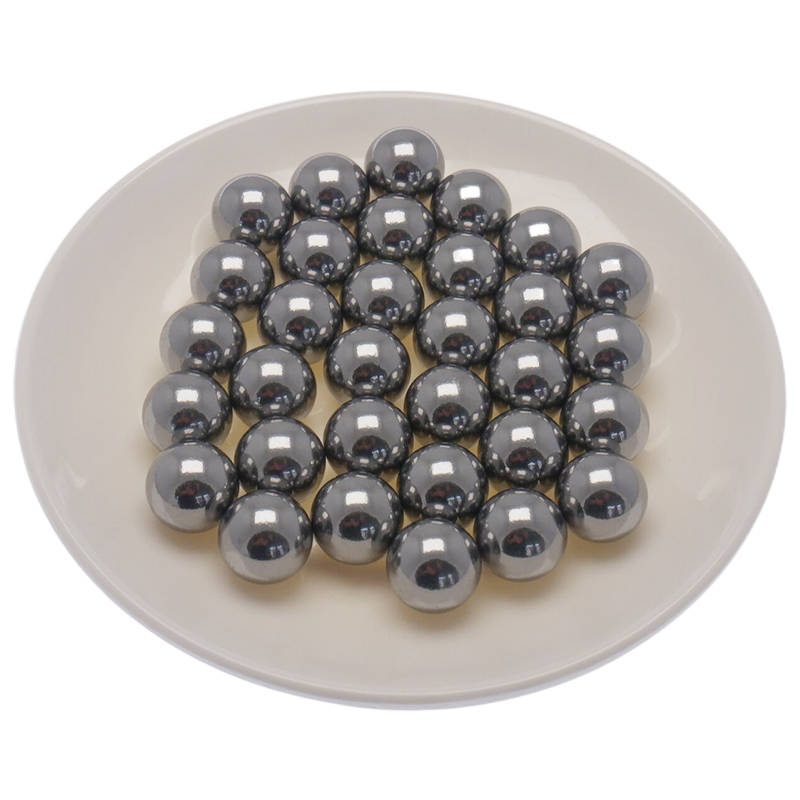
Industrial sustainability and power management face an immediate bottleneck. Traditional porous materials and liquid amines are rapidly hitting rigid performance ceilings. High degradation rates and severe regeneration costs block further operational progress. We need a structural leap forward to overcome these persistent industrial limitations.
Synthesized Carbon Balls emerge as a vastly superior alternative. These precise spherical structures handle high-stress dual-use applications exceptionally well. They excel across high-capacity energy storage and demanding Carbon Capture, Utilization, and Storage (CCUS) operations. Their uniform morphology directly tackles the physical shortcomings of legacy materials.
Academic studies consistently demonstrate their massive theoretical potential. Now, we must actively shift our focus toward actual commercial viability. You will learn how to properly evaluate these advanced materials. We provide a rigorous framework for assessing enterprise pilot programs and driving industrial scaling. This analysis equips you to confidently transition away from outdated chemical systems.
Key Takeaways
Structural Superiority: Carbon balls offer optimized packing density and tunable porosity, directly resolving the mass-transfer limitations found in irregular activated carbons.
CCUS ROI: Transitioning to solid spherical carbon frameworks reduces the parasitic energy loads associated with traditional solvent regeneration.
Energy Storage Gains: Uniform morphology enhances electrical conductivity and ion transport, extending cycle life in advanced battery and supercapacitor systems.
Evaluation Mandate: Procurement and R&D decisions must weigh upfront synthesis costs against long-term operational savings and lifecycle longevity.
The Commercial Case for Carbon Balls in High-Demand Systems
Defining the Business Problem
Current baseline materials fall short under continuous industrial stress. Liquid amines suffer from severe degradation over time. They require massive thermal energy inputs for continuous regeneration. This creates an unacceptable thermal penalty across capture operations. Additionally, irregular activated carbons pack poorly inside energy storage electrodes. They create uneven electrical contacts. They restrict ion flow and limit overall system efficiency.
The Spherical Advantage
Engineered spheres solve these structural limitations completely. Carbon Balls feature an exact spherical morphology. This uniform shape translates directly to highly predictable fluid dynamics. Gas and liquid streams flow around spheres smoothly. They experience minimal pressure drops. Inside battery electrodes, spheres guarantee uniform electrical contacts. They distribute mechanical stress evenly across the entire surface area. You eliminate the sharp edges causing localized structural failures.
Success Criteria for Adoption
Decision-makers need strict baselines before abandoning legacy materials. You must establish clear metrics to justify the transition. Evaluate specific performance markers during pilot testing.
Volumetric Capacity: Measure the active material packed into a defined physical space.
Capture Efficiency: Track the specific thermal energy required per ton of carbon captured.
Cycle Stability: Monitor capacity retention across thousands of charge and discharge cycles.
Flow Resistance: Record the pressure drop across fluidized bed reactors.
Evaluating Carbon Balls for Energy Storage Performance
Packing Density and Volumetric Efficiency
Electrode manufacturing relies heavily on optimal material packing. We contrast spherical frameworks against carbon nanotubes and graphene sheets. Carbon nanotubes frequently entangle during manufacturing. They form dense bundles lacking usable surface area. Graphene sheets tend to stack together tightly. This restacking blocks critical ion pathways. Spheres perform entirely differently. They pack predictably into tight, ordered arrangements. They leave uniform interstitial spaces behind. This guarantees smooth electrolyte penetration. You achieve vastly superior volumetric efficiency without sacrificing internal surface area.
Electrochemical Stability
Modern supercapacitors and next-generation batteries demand extreme structural stability. Lithium-sulfur and sodium-ion batteries experience severe volume expansion. Irregular particles crack and pulverize during these repeated expansion cycles. Solid spheres resist this mechanical degradation naturally. Their geometry distributes expansion stress perfectly evenly. They maintain their physical integrity over prolonged usage.
Monitor these exact stability metrics during evaluation:
Capacity Retention: Ensure retention remains above eighty percent after two thousand cycles.
Coulombic Efficiency: Track the ratio of discharge capacity to charge capacity.
SEI Layer Uniformity: Confirm the solid-electrolyte interphase forms evenly across the spherical surface.
Internal Resistance: Measure the impedance growth over the entire operational lifespan.
Tunable Mesoporosity
Engineered pore sizes dictate overall energy storage success. You can tune the internal porosity of Carbon Balls during synthesis. We match these pores to specific electrolyte ions. Lithium ions require different pore structures than larger sodium ions. Proper pore matching optimizes the internal features-to-outcomes ratio. Ions enter and exit the framework rapidly. This accelerates charge rates significantly. You can customize the material exactly for your specific energy application.
Best Practices for Energy Integration
Calender electrodes carefully to avoid crushing the spherical structures.
Match the conductive binder ratio specifically to the sphere diameter.
Test rate capability across multiple temperature gradients.
CO2 Capture Efficiency: Metrics for CCUS Integration
Adsorption Capacity vs. Selectivity
Real-world flue gas is incredibly complex. It contains nitrogen, oxygen, and various trace contaminants. Evaluate how materials perform within these mixed-gas streams. Solid spheres offer excellent adsorption capacity under varying pressures. However, capacity alone means little without high selectivity. The engineered surfaces selectively grab target molecules. They ignore abundant nitrogen streams completely. This ensures high-purity capture even under fluctuating temperature conditions.
Regeneration Energy Economics
Thermal energy dictates the economic viability of capture operations. We must compare solid sorbents against aqueous absorbents. Liquid amines contain massive amounts of water. You must boil all this water to release the captured gas. This requires immense thermal energy. Solid spheres possess a profoundly lower specific heat capacity. They heat up rapidly under gentle thermal loads. They release captured molecules quickly. This drastically reduces the parasitic energy drag on the entire facility.
Chart 1: Comparative Regeneration Energy Loads
Capture Material
Specific Heat Capacity
Regeneration Temperature
Thermal Energy Penalty
Aqueous Amines (MEA)
High (~4.2 J/g·K)
120°C - 140°C
Severe
Non-Aqueous Liquids
Moderate (~2.5 J/g·K)
90°C - 110°C
Moderate
Carbon Balls
Low (~1.0 J/g·K)
70°C - 90°C
Minimal
Hydrophobicity and Real-World Conditions
Industrial emissions contain heavy moisture. Many advanced materials fail completely in wet environments. Metal-Organic Frameworks (MOFs) often degrade when exposed to humidity. Water molecules compete aggressively for adsorption sites. Engineered spheres bypass this critical failure point. We apply hydrophobic surface modifications during the final synthesis stage. The spheres repel incoming moisture actively. They maintain their capture efficiency across actual industrial emission scenarios. Do not rely solely on dry-gas laboratory data.
Cost-to-Outcome Analysis: Carbon Balls vs. Traditional Alternatives
Mapping Synthesis Costs Against Lifespan
Evaluate the initial procurement costs against the long-term operational lifespan. Hydrothermal carbonization and template methods demand higher initial capital. Advanced chemical vapor deposition requires precision equipment. However, these synthesis methods yield incredibly durable materials. Legacy materials require constant replenishment. Solid spheres endure thousands of thermal swings without degrading. This longevity offsets the initial synthesis premium. You reduce maintenance downtime drastically. You also eliminate the recurring costs of replacing degraded chemical solvents.
Comparative Performance Matrix
We must benchmark spherical frameworks against established industry alternatives. The following table highlights the operational differences across key metrics.
Metric
Carbon Balls
Activated Carbon
MOFs
Liquid Amines
Packing Density
Uniform / Excellent
Irregular / Poor
Variable
N/A (Liquid)
Flow Resistance
Very Low
High (Prone to clogging)
Moderate
Low
Moisture Stability
High (Hydrophobic)
Moderate
Generally Poor
High (Aqueous)
Corrosion Risk
None
None
Low
Extreme
Compliance and Safety
Regulatory frameworks are tightening globally. Amine-based capture systems generate toxic degradation byproducts. Nitrosamines pose severe environmental and health risks. Handling these hazardous materials requires expensive safety infrastructure. Solid carbon frameworks bypass these regulatory risks completely. They do not evaporate. They do not degrade into toxic aerosols. Transitioning to solid sorbents simplifies facility compliance. You protect workers and reduce liability exposure.
Common Mistakes in Material Evaluation
Ignoring the hidden costs of solvent pipeline corrosion.
Relying exclusively on theoretical maximum capacity rather than working capacity.
Failing to test solid sorbents under realistic humidity levels.
Implementation Realities: Scaling from Lab to Industrial Deployment
Synthesis Scalability Bottlenecks
We must discuss current scaling limitations transparently. Producing uniform spheres at a bench-scale is straightforward. Scaling to metric-ton commercial availability presents significant engineering hurdles. Batch reactors struggle to maintain exact temperature gradients at large volumes. This leads to inconsistent particle sizes. The industry is rapidly shifting toward continuous rotary kiln reactors. Continuous synthesis methods guarantee strict batch-to-batch consistency. Evaluate a supplier based on their continuous production capabilities. Avoid vendors relying entirely on small batch autoclaves.
Retrofitting Existing Infrastructure
Integrating solid sorbents requires careful engineering adjustments. You must analyze your existing fluid bed reactors. Solid spheres flow beautifully, almost resembling a heavy liquid. However, you must adjust gas velocity parameters to prevent excessive material carryover. Screen sizes and cyclone separators require minor recalibration. For energy storage, retrofitting battery manufacturing lines is far simpler. Standard slurry mixing and slot-die coating equipment handle spherical powders seamlessly. You rarely need entirely new coating machinery.
Shortlisting Logic for Procurement
R&D directors need a reliable framework for selecting licensing partners. Use empirical data to guide your decisions. Request specific documentation before moving to pilot testing.
Empirical Data Review: Demand life-cycle testing data under actual industrial conditions.
Pilot-Scale Readiness: Confirm the supplier operates a multi-kilogram pilot facility.
Consistency Audits: Request particle size distribution charts from five consecutive production runs.
Surface Area Verification: Verify BET surface area measurements through independent lab testing.
Conclusion
The transition toward advanced materials requires careful strategic planning. Engineered spherical frameworks demand a higher initial investment in synthesis and material engineering. However, their lifecycle durability easily justifies this early expenditure. Carbon Balls deliver unmatched dual-use efficiency. They eliminate the severe thermal penalties of legacy solvents. They resolve the structural degradation issues plaguing high-capacity batteries. They stand out as a highly viable solution for next-generation energy and capture projects.
Take immediate action to validate these materials. Initiate localized pilot testing using realistic gas streams and electrolytes. Request comprehensive batch-consistency data from credible material suppliers. Finally, align your procurement timelines carefully with scheduled infrastructure retrofitting. This ensures a seamless transition and immediate operational improvements.
FAQ
Q: What makes carbon balls structurally different from standard activated carbon?
A: Standard activated carbon features highly irregular, jagged shapes. These random shapes pack poorly, creating irregular void spaces and high flow resistance. Carbon balls possess a uniform spherical morphology. This exact shape eliminates dead zones, reduces pressure drop in gas flows, and vastly improves volumetric packing inside electrodes.
Q: Are carbon balls commercially scalable for large-scale CCUS projects right now?
A: They are currently highly viable for specialized or pilot-scale applications. However, multi-ton industrial scaling remains an ongoing challenge. Widespread commercial deployment depends heavily on advancing continuous synthesis methods rather than relying on traditional batch reactors. Production capacity is increasing rapidly every year.
Q: How do carbon balls reduce the energy penalty in carbon capture?
A: Liquid amine solutions consist mostly of water, which requires massive thermal energy to boil and release captured gas. Solid carbon sorbents have a significantly lower specific heat capacity. They require far less heat for desorption. This drastic reduction in thermal demand lowers the overall energy penalty.
Q: What are the primary synthesis methods for commercial carbon balls?
A: The primary methods include hydrothermal carbonization (HTC), chemical vapor deposition (CVD), and template-assisted synthesis. Hydrothermal carbonization currently offers the best cost-to-yield ratio for large-scale production. CVD provides exceptional purity, while template methods allow for highly precise internal pore engineering.
With advanced production equipment and state-of-the-art testing instruments, our commitment to quality permeates every phase of production, from inception to final delivery.